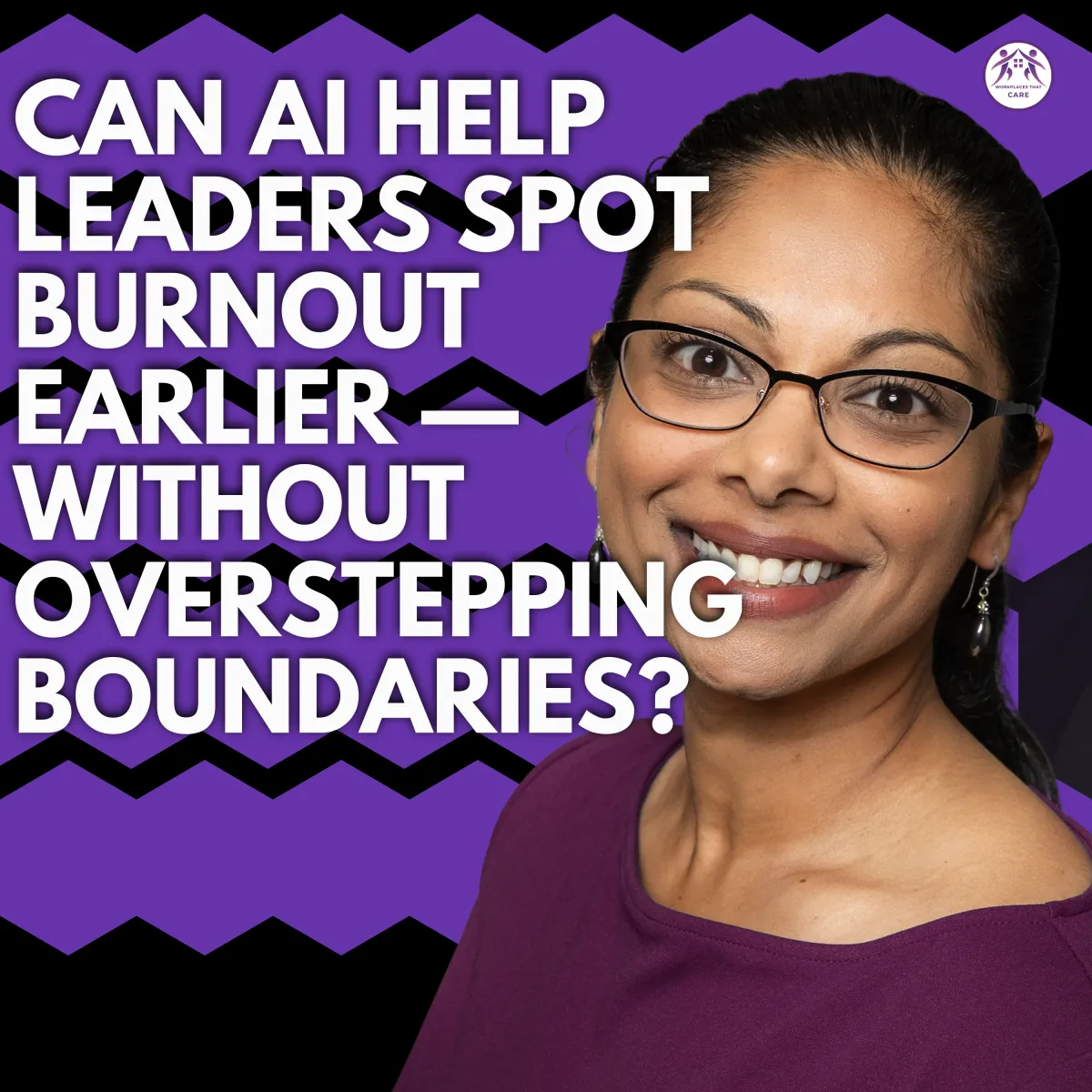
Can AI Help Leaders Spot Burnout Earlier — Without Overstepping Boundaries?
Burnout is often invisible until it isn’t.
It rarely begins with someone saying, “I’m overwhelmed.” Instead, it shows up quietly. Slower responses. Later nights. Missed details. Reduced energy. Emotional withdrawal. Constant task switching that looks like productivity but feels like exhaustion.
Most leaders do not miss these signs because they do not care. They miss them because they are overwhelmed too.
This is where AI, used carefully and ethically, can help leaders notice early signals so they can respond with compassion instead of control.
In a Workplace That CARES, AI is not a monitoring tool. It is a support tool. A way to improve awareness, not surveillance.
Why Leaders Often Miss Burnout Signals
Burnout signals are subtle by design. They hide inside normal work patterns.
More meetings. Fewer breaks. Late-night messages. Increased mistakes. Slower responses. Emotional withdrawal. Packed calendars with no recovery time.
Managers are often managing their own overloaded schedules while trying to support others. Without visibility, burnout becomes something leaders only address after performance drops or someone reaches a breaking point.
What leaders need is not more pressure to “pay attention better.” They need better systems that surface risk early and gently.
AI Reveals Patterns, Not Personal Judgments
AI should never be used to diagnose, label, or evaluate employee wellbeing. That crosses ethical and relational boundaries.
But AI can surface patterns that suggest workload strain.
Patterns like meeting load doubling in a week. Focus time disappearing. After-hours work creeping in. Schedules stacking without recovery. Communication becoming fragmented.
AI does not say, “This person is burned out.” It simply taps leaders on the shoulder and says, “Something here may need attention.”
This is leadership with awareness, not surveillance.
Practical Ways Leaders Can Use AI Today
Leaders can start small, using AI as a lens for reflection rather than a tool for control.
One practical approach is reviewing workload health. Leaders can paste a team calendar or schedule into an AI tool and ask it to identify potential signs of overload, excessive meetings, or time pressure, along with supportive adjustments. This helps leaders notice meeting density, stacked days, and missing focus time.
The caution is critical. Leaders should interpret trends, not judge individuals. This information should guide support, not evaluation.
Another powerful use is prioritization during high-stress periods. When everything feels urgent, overwhelm increases. Leaders can ask AI to organize tasks by urgency, importance, and workload impact, and suggest what could be postponed or simplified. Final decisions must remain human, but AI can help leaders see options more clearly.
Meeting overload is another common contributor to burnout. Leaders can upload a team’s meeting schedule and ask AI to identify back-to-back blocks, lack of breaks, and consolidation opportunities. This often surfaces meetings that could be combined, shortened, or replaced with asynchronous updates.
AI can also help leaders prepare for supportive one-on-one conversations. Before a check-in, leaders can ask AI to suggest compassionate questions, supportive language, and ways to offer help without judgment. This does not replace empathy. It supports leaders in showing up more present and thoughtful.
After-hours work patterns are another area where AI can help without blaming. Leaders can ask AI to identify trends in communication timing, such as increases in late-night or weekend messages, and suggest supportive ways to address it. The goal is not policing behavior. It is protecting people.
Awareness Enables Care
Imagine being the leader who notices strain early and says, “I noticed your workload looks intense. How can I help lighten it?” instead of waiting until performance slips and asking, “What’s going on?”
AI cannot lead your team. It cannot understand emotion. It cannot replace trust.
But it can help leaders be more attentive, more intentional, and more human.
In a Workplace That CARES, AI becomes a practical resource that supports leaders in doing what they already want to do: protect people before burnout becomes a crisis.
If this topic resonates, I invite you to subscribe to the Workplaces That Care newsletter for ongoing insights, tools, and leadership guidance on preventing burnout and building sustainable performance.
Together, let's build a workplace that CARES!
– Dr. Anna Thomas
Explore More from Workplaces That Care
Read More: https://workplacesthatcare.com/blog
Workplaces That Care Book: https://amzn.to/49w0cl1
The Future of Work is CARE (free training): https://workplacesthatcare.com/webinar-registration
*Bio: Dr. Anna Thomas is a board-certified physician, TEDx speaker, workplace wellbeing strategist, and leadership coach who helps organizations strengthen culture, resilience, and performance in a changing world. As founder of LifeCare LeadHership and Workplaces That Care, she blends clinical insight with leadership development to teach practical tools for building supportive, care-ready workplaces. Her keynotes and trainings address workforce wellbeing, retention, burnout prevention, caregiving in the workplace, women’s leadership, and navigating life and work transitions. As the creator of the CARE Framework, she equips leaders to support the whole person so teams stay engaged, healthy, and committed. Audiences appreciate her grounded delivery, relatable stories, and clear, actionable strategies. Learn more or book Dr. Thomas at www.WorkplaceWellbeingSpeaker.com
The views and opinions expressed in this post are solely those of Dr. Thomas and do not reflect the views of any past or present employer. This content is for educational and informational purposes only and is not intended as medical or legal advice.