How Can AI Make Performance Reviews More Human and Less Stressful?
Most people do not fear feedback.
They fear being misunderstood.
That is the truth sitting underneath so many performance review conversations. Employees are not usually afraid of hearing what went well and what needs to improve. They are afraid the review will not reflect the reality of their year. They are afraid important context will be missing. They are afraid the story told on paper will feel smaller than the work they carried, or harsher than the intent behind it.
And when a review feels unfair or inaccurate, it does more than sting. It changes how people see their place in the organization. It changes what they are willing to contribute next. It can quietly shift loyalty into caution.
Performance reviews are emotionally loaded because they compress an entire year of effort, growth, setbacks, and resilience into one moment. That is a lot to ask of any process. It is also why so many leaders feel pressure before review season even begins.
I have coached many managers who care deeply about their people and still feel uneasy when they sit down to write reviews. They say things like, “I do not want to hurt anyone,” or “I am not a writer, I am a leader.” They worry that feedback will come across the wrong way. They worry they will miss something important. They worry about getting it wrong.
Those worries make sense. A review is not just a document. It is a relationship moment. It is a trust moment. It is a signal about whether the organization sees the person in front of it.
This is where AI, used thoughtfully, can help.
Not by replacing your judgment. Not by evaluating your people. Not by reducing performance to a set of automated conclusions. But by reducing the administrative weight of reviews so leaders can show up with clarity, fairness, and compassion.
In a Workplace That CARES, technology does not replace humanity. It supports it.
The Human Challenge Behind Reviews
Let me describe a story I hear in different versions almost every week.
A manager sits down to write a review. They open their notes and realize they have scattered thoughts from meetings, half-written comments, a few highlights saved in a document somewhere, and a strong desire to do this well. They also realize they do not have enough time.
They are trying to describe a full human being with strengths, contributions, growth edges, and challenges in a few paragraphs. They want to be honest, but also supportive. Clear, but not cold. Specific, but not overwhelming. They want the employee to walk away feeling valued and oriented toward growth, not judged and deflated.
Meanwhile, the employee is bracing for impact. Even confident employees can feel a tightening in their chest before a review. They wonder if their efforts were seen. They wonder whether their manager understands the invisible work that held projects together. They wonder if the review will capture the full picture, including the challenges they navigated quietly.
This moment deserves care. It deserves clarity. It deserves humanity.
AI cannot deliver that for you. But it can help you prepare for it in a way that honors your people.
The Insight: AI Supports Communication With Care
One of the most helpful ways to think about AI in performance reviews is this: AI can help with structure, language, and consistency. Leaders provide the heart, the context, and the relationship.
When used well, AI can help you organize your thoughts so the review is coherent and fair. It can help you summarize year-long contributions so the review is not based solely on what you remember in the last few weeks. It can help you refine tone so your feedback lands as constructive rather than harsh. It can help you check for biased language so your review focuses on observable behaviors rather than subjective labels. It can help you shape goals so the review ends with direction and hope.
This matters because review stress is often caused by uncertainty. Employees do not know what will be said, how it will be said, or whether it will feel fair. Managers do not know whether they captured the right details, used the right language, or communicated in a way that protects trust.
AI can reduce uncertainty by improving clarity.
And clarity is a form of care.
What This Looks Like in Practice
The most effective use of AI in performance reviews is not complicated. It does not require a new platform or an overhaul of your review system. It requires intentional use of tools that support your process.
Here are five practical ways leaders can use AI to make reviews kinder and clearer, while keeping the review rooted in human judgment.
1) Use AI to Organize Raw Notes Into a Clear Narrative
Many managers have the right insights, but they are scattered. Notes live in different places. Feedback exists in fragments. It can feel overwhelming to turn those fragments into a coherent story.
A tool like ChatGPT or Microsoft Copilot can help you shape your thoughts into a structure that includes strengths, accomplishments, and development areas. The value here is not that AI writes the review for you. The value is that it reduces the blank-page pressure so you can focus on what you want the employee to understand and how you want them to feel.
When managers stop worrying about phrasing, they have more energy to focus on accuracy and care.
2) Use Tone Tools to Keep Language Warm and Professional
Tone can make or break a review. A sentence that looks neutral to the writer can feel sharp to the reader, especially if the employee is already anxious.
Tools like Grammarly Premium can help leaders adjust tone so feedback feels calm, constructive, and supportive. This does not mean sugarcoating. It means reducing unnecessary friction. It means communicating with respect. It means choosing words that keep the door open rather than slamming it shut.
This is especially helpful for leaders writing quickly, late at night, or under deadline. Tone is often the first thing to slip when time is tight.
3) Use Bias Checking to Reduce Subjective Language
Bias often shows up in performance reviews through vague or loaded words. Terms like “aggressive,” “emotional,” “quiet,” or “likable” can carry cultural assumptions and can penalize people for style rather than substance.
Tools like Writer.com include features that flag biased or subjective language and suggest more neutral alternatives. This helps shift feedback toward observable behaviors and measurable outcomes. It also supports equity by reducing patterns that can disadvantage women, caregivers, and employees who are less visible or less likely to self-promote.
This is not about making language sterile. It is about making it fair.
4) Use AI Summaries to Capture Year-Long Contributions More Accurately
One of the most common review problems is recency bias. Managers remember what happened in the last month more clearly than what happened six months ago. Quiet work can disappear. The employee who kept everything running smoothly may not be as memorable as the employee who presented the final result.
Transcripts and summaries can help here. Tools like Otter.ai or Zoom AI Companion can summarize key moments from one-to-ones, project updates, presentations, and team discussions. This gives managers a more accurate picture of contributions over time.
When reviews are grounded in a fuller record, employees feel seen. Caregivers are less likely to be penalized for a season of temporary strain. Introverts do not disappear. Emotional labor and stabilizing work are more likely to be acknowledged.
Accuracy is care.
5) Use AI to Build Forward-Focused Development Plans
Performance reviews should end with hope. Not vague encouragement, but a clear path forward.
Tools like Notion AI can help create development plans based on an employee’s strengths, goals, and role expectations. This turns the review into a shared plan rather than a verdict. It helps employees leave the conversation knowing what matters, what support exists, and what growth can look like in the next season.
When reviews include forward-focused planning, stress often decreases because the review is no longer just about judgment. It becomes about partnership.
A Ground Rule That Protects Humanity
If you use AI in performance reviews, one principle matters most: AI supports your communication, but it should not replace your judgment.
You should never outsource evaluation to a tool. You should never rely on AI to infer performance without evidence. And you should be cautious about what data you input, including confidentiality and organizational policies.
The best use of AI is supportive, not decisive. It helps you communicate what you already know, more clearly and more fairly. It helps you say the hard things with care. It helps you capture the full picture so employees feel understood rather than reduced.
When AI Handles the Structure, Leaders Can Handle the Heart
Imagine a review process where leaders feel prepared and confident. Feedback is clear and fair. Tone feels calm and supportive. Contributions are accurately captured. Employees walk away feeling valued. The conversation feels like care, not fear.
AI does not create that on its own. Leaders do.
But AI can reduce the paperwork weight so leaders have more capacity for the human work of leadership. It can help you say what your heart already knows.
This review is not about your worth. It is about your growth, your potential, and your future here.
In a Workplace That CARES, AI supports the structure so leaders can support the people.
If you want more grounded tools for building a culture where care and performance thrive together, subscribe to the Workplaces That Care newsletter. You will receive practical leadership language, evidence-informed strategies, and culture tools you can use right away.
Together, let's build a workplace that CARES!
Dr. Anna Thomas
Explore More from Workplaces That Care
Read More: https://workplacesthatcare.com/blog
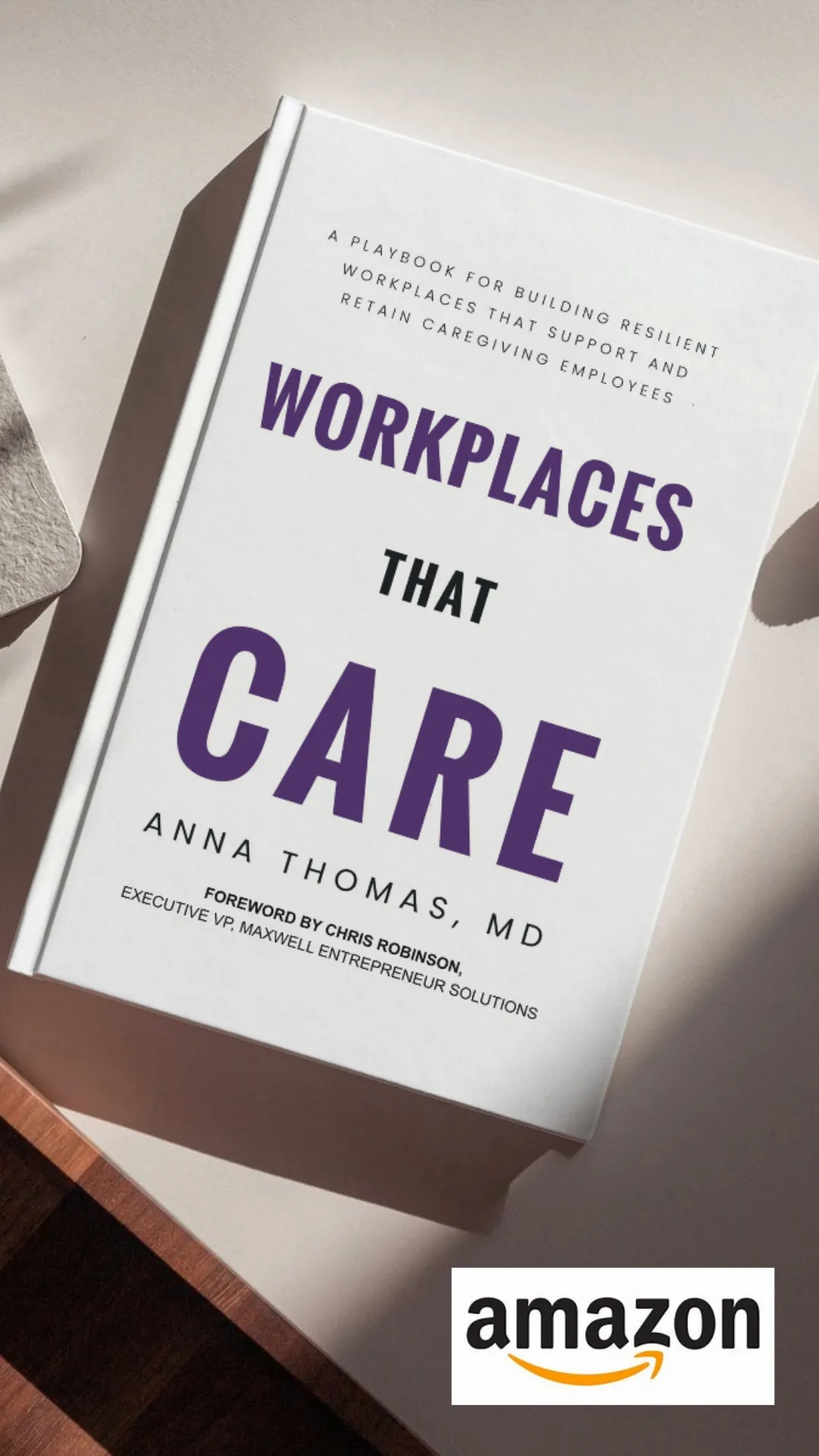
Workplaces That Care Book: https://amzn.to/49w0cl1
The Future of Work is CARE (free training): https://workplacesthatcare.com/webinar-registration
*Bio: Dr. Anna Thomas is a board-certified physician, TEDx speaker, workplace wellbeing strategist, and leadership coach who helps organizations strengthen culture, resilience, and performance in a changing world. As founder of LifeCare LeadHership and Workplaces That Care, she blends clinical insight with leadership development to teach practical tools for building supportive, care-ready workplaces. Her keynotes and trainings address workforce wellbeing, retention, burnout prevention, caregiving in the workplace, women’s leadership, and navigating life and work transitions. As the creator of the CARE Framework, she equips leaders to support the whole person so teams stay engaged, healthy, and committed. Audiences appreciate her grounded delivery, relatable stories, and clear, actionable strategies. Learn more or book Dr. Thomas at www.WorkplaceWellbeingSpeaker.com
The views and opinions expressed in this post are solely those of Dr. Thomas and do not reflect the views of any past or present employer. This content is for educational and informational purposes only and is not intended as medical or legal advice.