Does Offering Flex Time Really Keep Caregiving Employees From Quitting?
Your company offers flex time.
Maybe it is compressed weeks, adjustable hours, hybrid schedules, or a “work when you want” guideline that sounds progressive on paper. And yet caregivers are still leaving. Burnout is still rising. Attrition is still climbing.
So what is going on?
Here is the truth many organizations do not want to confront. Flex time alone does not keep caregiving employees from quitting. And in some workplaces, it can actually backfire.
That may sound surprising, because flexibility is often treated as the gold standard solution. But flexibility is not a perk. It is a system. And when that system is unclear, inconsistent, or culturally unsafe, it creates stress instead of reducing it.
I have seen what happens when companies offer flexibility without structure, without psychological safety, and without strategy. It does not retain caregivers. It confuses them. It sends a message that sounds like support on the surface, but feels risky in reality.
Use this if you dare. But you are on your own.
If you want flexibility to be a true retention strategy, it has to be designed to work in real life. It has to protect performance and prevent resentment. It has to be something managers can apply consistently. And it has to feel safe for employees to use.
Let’s unpack why flex time often fails, what actually makes it effective, and how to use the CARE Framework to turn flexibility into a caregiver-friendly system that keeps people.
Why Flex Time Often Fails Caregivers
Flex time is usually introduced with good intentions. Leaders know caregiving is part of the workforce reality. They want employees to stay. They want to reduce burnout. They want to signal trust.
But when flexibility is offered without clear design, three predictable problems show up.
1) Caregivers Do Not Use It
This is the first and most important failure point. Many caregivers do not use flex time, even when they need it.
They fear being seen as less committed. They worry about losing opportunities. They have watched people get quietly sidelined for needing “too much.” They do not want to be perceived as high maintenance.
So they do not flex. They overwork.
They shift their caregiving into early mornings and late nights. They answer emails after bedtime. They make up time on weekends. They try to meet expectations without visibly changing anything.
That might work for a while. But over time, it leads to exhaustion. And exhaustion leads to burnout. And burnout leads to exit.
2) Team Resentment Builds
Flex time can also create resentment if it is not designed at the team level.
When one person flexes and another person absorbs the slack, resentment grows quietly. It might not show up in a meeting, but it shows up in tone, collaboration, and trust. It shows up as quiet resistance. It shows up when teammates stop helping each other because they feel taken advantage of.
If expectations, transparency, and planning are missing, flexibility can feel like special treatment instead of smart strategy.
And that undermines the culture you are trying to build.
3) Managers Get No Training
Many managers are told, “Be flexible,” but they are not told how.
So what happens is predictable. Some managers say yes. Others say no. Some overextend themselves by covering work quietly. Others disengage or apply rigid rules to protect themselves. Inconsistency becomes culture.
Caregivers learn that flexibility depends on the manager, not the policy. And if the manager is unpredictable, flexibility becomes risky.
In that environment, even generous flex policies cannot retain employees because employees do not trust the system.
What Flex Time Must Create to Actually Retain Caregivers
Flexibility becomes retention when it creates three conditions: predictability, permission without penalty, and team-based design.
These are not extras. They are the foundation.
1) Predictability
Flex time is often framed as freedom. But for caregivers, the real need is not randomness. It is predictability.
Caregivers need boundaries, clear expectations, and consistent rhythms, even if those rhythms look different from the standard schedule. If a flex arrangement changes week to week, it does not reduce stress. It increases it.
When expectations are predictable, caregivers can plan. When they can plan, they can perform. When they can perform sustainably, they stay.
2) Permission Without Penalty
A policy is not the same as permission.
If using flex time leads to missed promotions, subtle shaming, or doubts about commitment, it is not a benefit. It is a risk.
For flexibility to work, leaders must model the message that using support systems is not weakness. It is smart. It is normal. It is supported.
When leaders treat flexibility as a legitimate tool for sustaining performance, caregivers stop feeling like they have to hide.
3) Team-Based Design
Flexibility cannot work as an individual arrangement only. It has to work at the team level.
That means cross-training, coverage agreements, transparent handoffs, and load-sharing with consent. Otherwise, you are not offering care. You are shifting stress from one person to another.
Team design protects morale. It protects fairness. And it makes flexibility sustainable.
Making Flex Time Effective With the CARE Framework
The CARE Framework gives organizations a way to move from vague flexibility to a clear, equitable system.
Culture
Do leaders talk openly about flexibility and caregiving? Do they model it?
You cannot normalize what no one sees. If leaders never mention flexibility, employees assume it is dangerous. If leaders model boundaries, it signals permission.
A simple message can shift the tone.
“We expect and encourage people to use flexible options when needed.”
“Here is how I have adjusted my schedule as a leader during high-demand seasons.”
When leaders speak, stigma drops.
Awareness
Do you know who is using flex time and who is not? Do you know why?
If caregivers are not using flexibility, it is a signal. The barrier might be fear, manager inconsistency, unclear expectations, or a lack of practical fit. But you will not know unless you ask.
Add questions to surveys that invite truth without forcing disclosure.
“Do you feel comfortable requesting flexibility?”
“Have caregiving needs impacted your schedule in the last six months?”
Then look at patterns by department, tenure, and role. Awareness turns assumptions into strategy.
Resources
Flexibility needs infrastructure.
It needs tools for coverage, documentation protocols, shared calendars, and clear handoff expectations. It needs manager guides for decision-making so managers are not improvising. It needs clarity about what flexibility looks like in practice.
Without infrastructure, flex becomes chaos. And chaos is the opposite of support.
Empowerment
Flexibility should be co-created, not granted like a favor.
Ask caregivers questions that support both performance and sustainability.
“What schedule changes would make your workload sustainable?”
“What are your non-negotiables at home right now?”
“What kind of rhythm would support both your care and your goals?”
When flexibility is co-designed, caregivers stay engaged instead of feeling like they are surviving.
The Bigger Picture: Flex Time Is About Trust
Flex time is not just about hours. It is about trust.
It is about showing people they do not have to hide or stretch themselves to the edge just to stay in the game. It is about giving employees permission to be human and the structure to succeed despite complexity.
When you do flexibility right, you do not lose performance. You gain loyalty.
And that loyalty is one of the most valuable outcomes a workplace can build.
If you want more tools and leadership language for building caregiver-friendly systems that retain talent and protect performance, I invite you to subscribe to the Workplaces That Care newsletter. You will receive practical strategies, scripts, and evidence-informed guidance for creating a culture where care is a strength, not a liability.
Together, let's build a workplace that CARES!
Dr. Anna Thomas
Explore More from Workplaces That Care
Read More: https://workplacesthatcare.com/blog
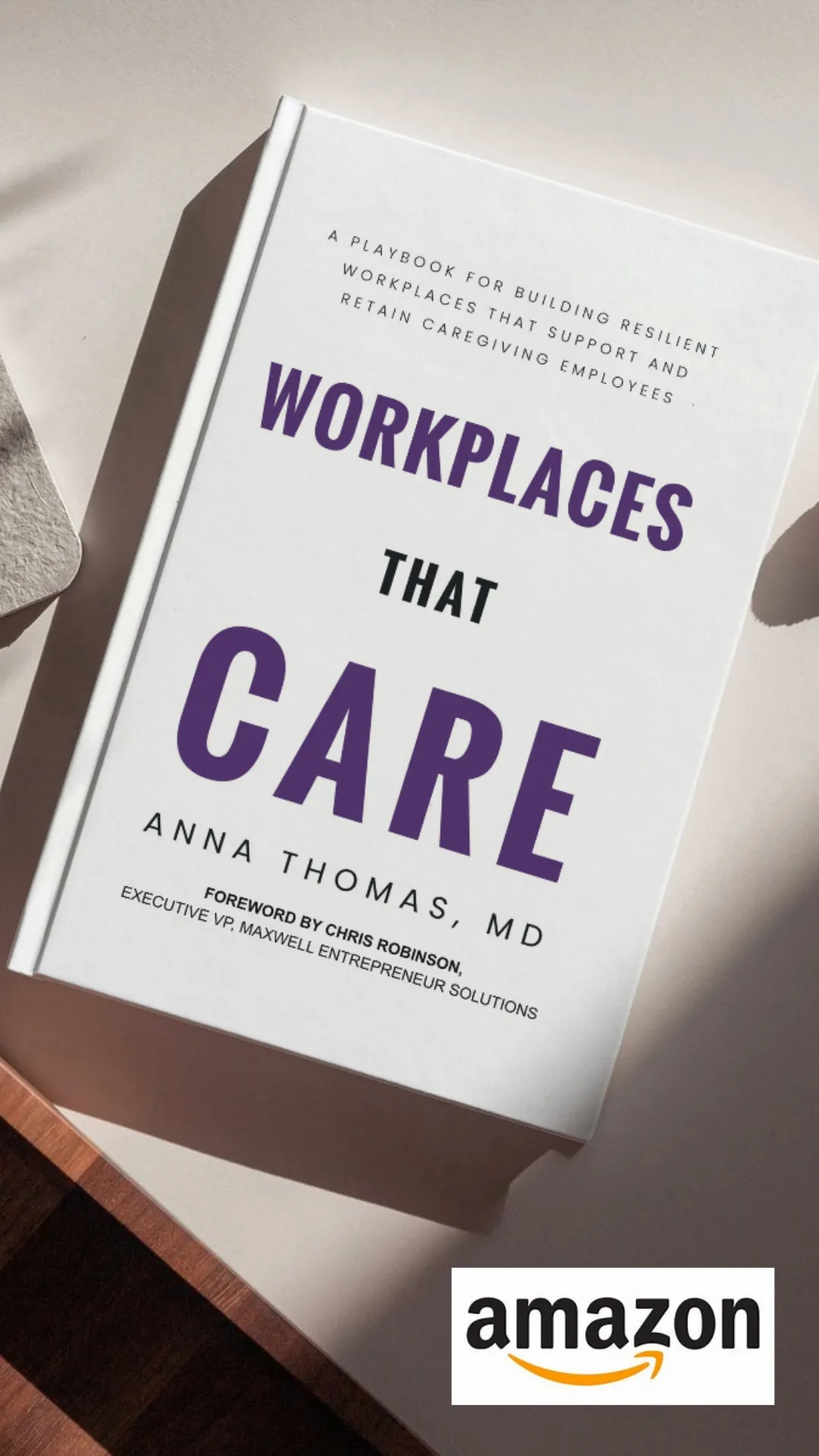
Workplaces That Care Book: https://amzn.to/49w0cl1
The Future of Work is CARE (free training): https://workplacesthatcare.com/webinar-registration
*Bio: Dr. Anna Thomas is a board-certified physician, TEDx speaker, workplace wellbeing strategist, and leadership coach who helps organizations strengthen culture, resilience, and performance in a changing world. As founder of LifeCare LeadHership and Workplaces That Care, she blends clinical insight with leadership development to teach practical tools for building supportive, care-ready workplaces. Her keynotes and trainings address workforce wellbeing, retention, burnout prevention, caregiving in the workplace, women’s leadership, and navigating life and work transitions. As the creator of the CARE Framework, she equips leaders to support the whole person so teams stay engaged, healthy, and committed. Audiences appreciate her grounded delivery, relatable stories, and clear, actionable strategies. Learn more or book Dr. Thomas at www.WorkplaceWellbeingSpeaker.com
The views and opinions expressed in this post are solely those of Dr. Thomas and do not reflect the views of any past or present employer. This content is for educational and informational purposes only and is not intended as medical or legal advice.