AI Won't Burn Out—But Your People Might: Redefining Wellbeing in the Age of Automation
AI Won't Burn Out—But Your People Might: Redefining Wellbeing in the Age of Automation
Artificial intelligence doesn't need a lunch break.
It doesn't become emotionally exhausted after a difficult conversation. It doesn't lose sleep over competing priorities or feel drained after a week of back-to-back meetings. It doesn't wonder whether its work has meaning or struggle to balance professional demands with responsibilities at home.
People do.
As organizations rapidly adopt AI, automation, and intelligent technologies, many leaders are focused on improving efficiency, accelerating productivity, and reducing operational costs. Those are worthwhile goals. Yet there is an important question every organization must ask alongside them.
How do we ensure technology enhances human performance instead of exhausting the people expected to keep pace with it?
The future of work is not simply about smarter technology. It is about wiser leadership.
The New Workplace Paradox
Artificial intelligence is transforming the way organizations operate.
Routine administrative tasks are becoming automated. Reports are generated in seconds. Scheduling, communication, analysis, and content creation now happen faster than ever before.
These innovations create tremendous opportunities.
Yet they also introduce a new challenge.
As technology accelerates, expectations often accelerate with it.
Employees receive more information, more notifications, more meetings, and more requests than ever before. Because technology can produce work continuously, organizations sometimes begin expecting people to operate with similar speed.
Gradually, the natural pauses that once allowed reflection, recovery, and thoughtful decision-making begin to disappear.
When burnout appears, many organizations respond by looking for additional efficiency.
The better question is whether people have the capacity to sustain the pace being created.
The issue is not artificial intelligence.
The issue is expecting human beings to function like machines.
Human Limits Are Not Weaknesses
Unlike technology, people require recovery.
We need sleep, meaningful relationships, moments of quiet, physical movement, and opportunities to recharge emotionally.
These biological realities are not obstacles to performance.
They are the very conditions that make sustained excellence possible.
Boundaries remind us that energy is finite.
Recovery allows creativity to return.
Purpose strengthens motivation.
Connection fuels resilience.
The organizations that thrive in the AI era will understand that human limitations are not liabilities. They are part of healthy, sustainable performance.
Why Wellbeing Is Becoming a Leadership Strategy
For many years, workplace wellbeing was often viewed as a wellness initiative managed primarily through benefits or employee assistance programs.
Today, wellbeing has become a leadership responsibility.
Artificial intelligence can increase productivity.
It cannot create psychological safety.
It can summarize meetings.
It cannot build trust.
It can identify patterns in data.
It cannot understand the emotional complexity behind those patterns.
Technology may enhance decision-making, but leadership remains responsible for creating environments where people feel valued, supported, and able to contribute their best work.
Organizations that overlook this reality risk creating highly efficient systems staffed by increasingly exhausted people.
Five Leadership Shifts for the AI Era
The first shift is redefining productivity.
Rather than celebrating constant speed, organizations should focus on sustainable performance.
High-performing teams require rhythm.
Periods of focused work must be balanced with opportunities for recovery, reflection, and learning.
Leaders can begin by asking an important question:
What pace allows our team to consistently perform at its best?
The second shift involves establishing healthy digital boundaries.
Artificial intelligence never logs off.
Employees should.
Simple practices such as delayed email delivery, meeting-free blocks, protected focus time, and reasonable expectations for after-hours communication help preserve attention and reduce unnecessary fatigue.
Boundaries communicate respect for people's time and energy.
The third shift is using AI to reduce cognitive load instead of increasing it.
Every new technology should simplify work rather than create additional complexity.
If new systems generate more notifications, dashboards, interruptions, or competing priorities, they may actually reduce productivity by fragmenting attention.
Technology should eliminate friction rather than create it.
The fourth shift emphasizes emotional intelligence.
As artificial intelligence assumes more analytical responsibilities, uniquely human capabilities become increasingly valuable.
Empathy, curiosity, communication, adaptability, ethical judgment, and emotional awareness will differentiate exceptional leaders.
Technical skills remain important.
Human skills become indispensable.
Finally, organizations should begin measuring energy alongside engagement.
Traditional engagement surveys often evaluate enthusiasm, satisfaction, or commitment.
They rarely examine exhaustion.
Leaders can ask questions such as:
How much energy do you have at the end of your workday?
What activities restore your energy?
Where do you experience unnecessary friction?
These conversations help organizations understand whether employees are thriving or merely enduring.
Technology Should Serve People
Imagine an organization successfully implementing artificial intelligence across every department.
Reports are generated instantly.
Processes become streamlined.
Performance metrics improve.
At the same time, employees gradually stop taking breaks.
Meetings become more frequent.
Workdays quietly extend into evenings.
Collaboration decreases because everyone feels pressured to keep moving.
Efficiency increases.
Human connection declines.
That is not innovation.
It is erosion.
Technology fulfills its greatest potential when it creates more space for creativity, thoughtful leadership, meaningful relationships, and strategic thinking.
Artificial intelligence should remove repetitive work so people can spend more time doing work that requires judgment, empathy, innovation, and collaboration.
That is where humans create lasting value.
The Future of Leadership
The organizations that will lead the future are not those with the fastest algorithms alone.
They will be the ones that understand technology and humanity are partners rather than competitors.
Artificial intelligence can amplify organizational capability.
Leadership determines whether that capability strengthens or diminishes the employee experience.
When leaders protect human energy, encourage healthy boundaries, and prioritize sustainable performance, employees become more innovative, resilient, and engaged.
People stop competing with technology.
They begin collaborating alongside it.
That is what the future of work should look like.
A Final Reflection
Artificial intelligence will continue evolving.
The question is whether leadership will evolve alongside it.
Technology can make work faster.
Only thoughtful leadership can make work healthier.
As we embrace the opportunities AI creates, let us also remember the people whose creativity, compassion, wisdom, and resilience continue to drive every successful organization.
If this article resonated with you, subscribe to the Workplaces That Care newsletter for practical leadership insights, evidence-based workplace strategies, and resources that help organizations build cultures where people and performance thrive together in the age of AI.
Together, let's build a workplace that CARES!
Dr. Anna Thomas
Explore More from Workplaces That Care
Read More: https://workplacesthatcare.com/blog
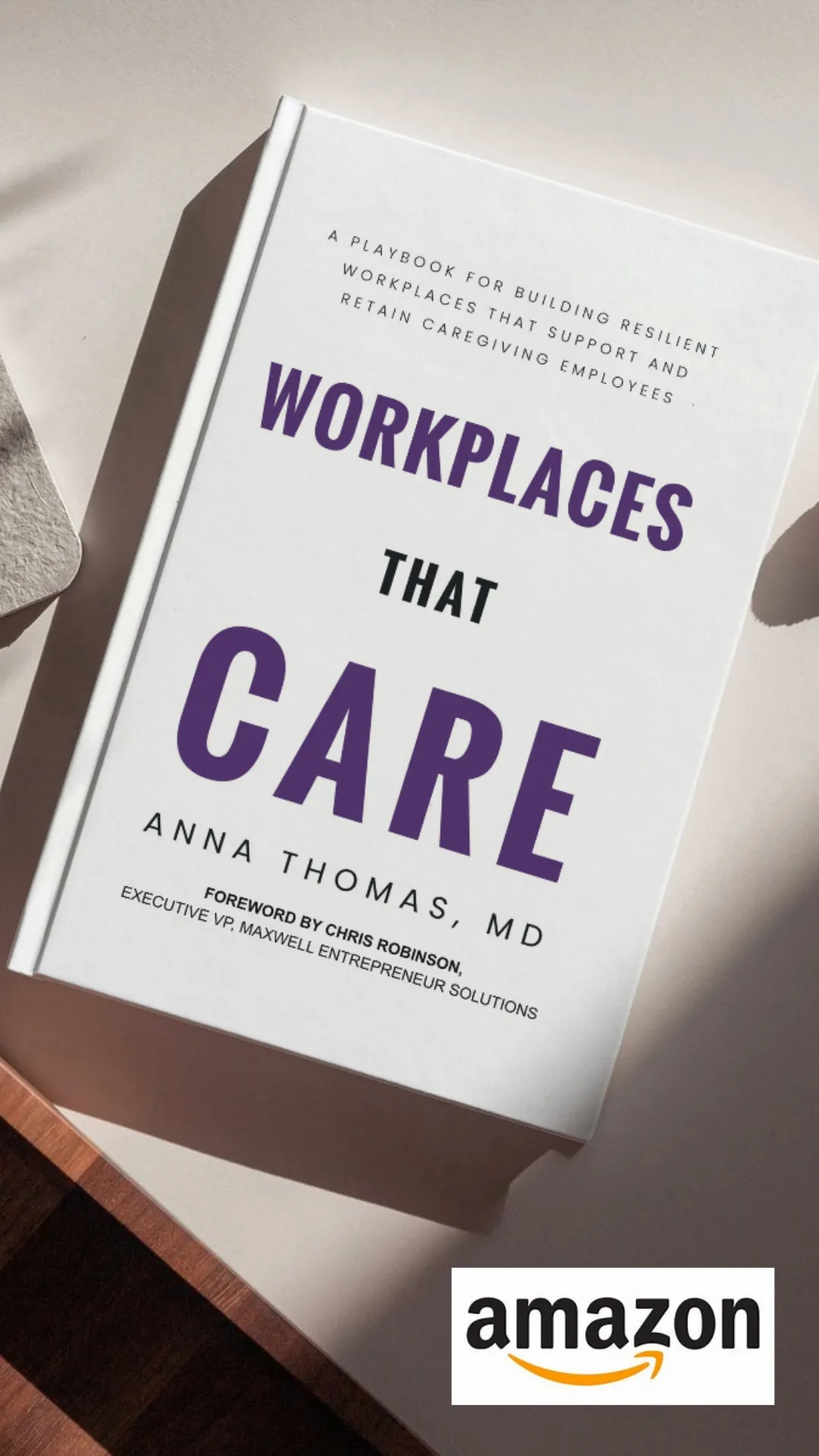
Workplaces That Care Book: https://amzn.to/49w0cl1
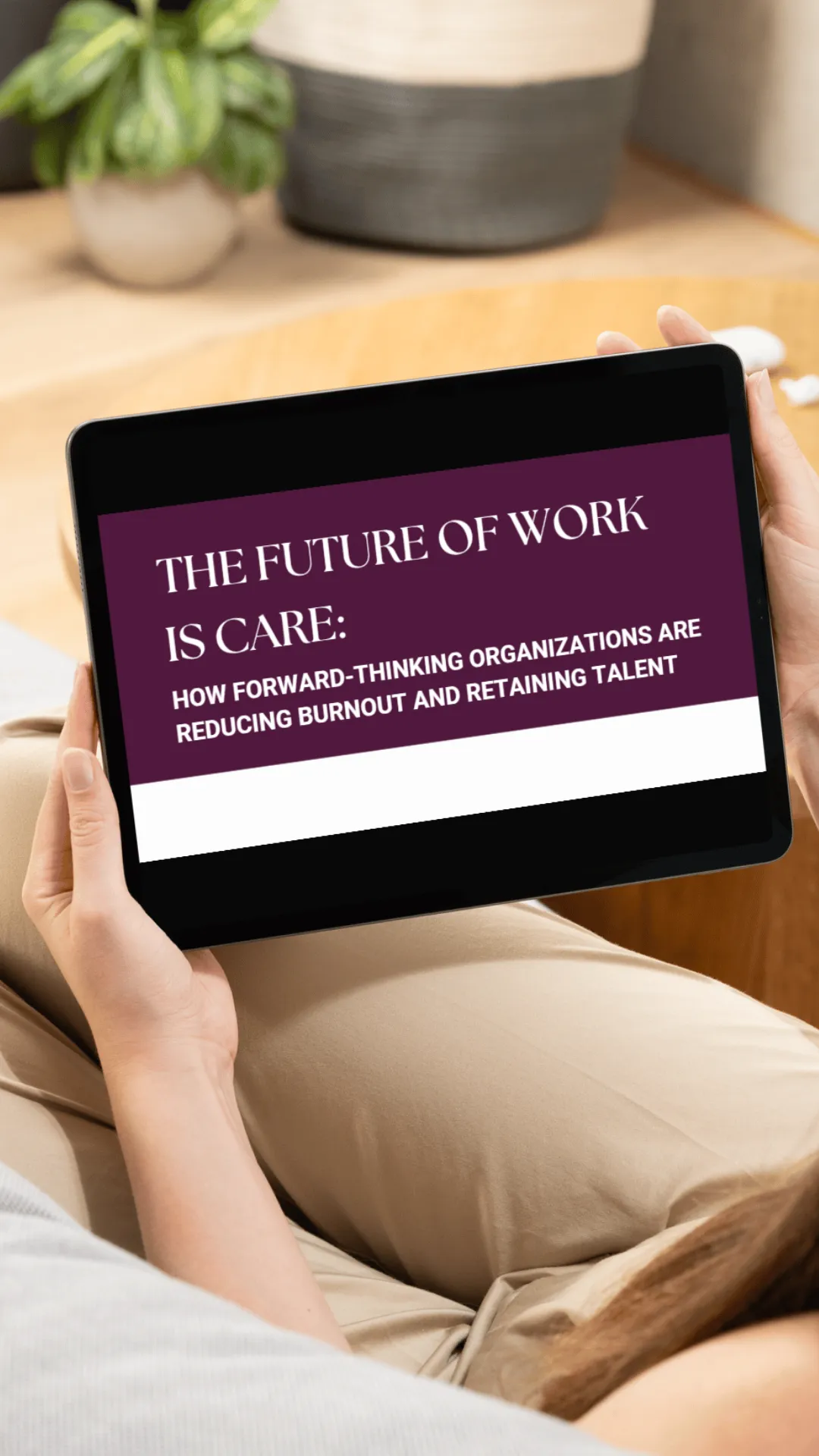
The Future of Work is CARE (free training): https://workplacesthatcare.com/webinar-registration
*Bio: Dr. Anna Thomas is a board-certified physician, TEDx speaker, workplace wellbeing strategist, and leadership coach who helps organizations strengthen culture, resilience, and performance in a changing world. As founder of LifeCare LeadHership and Workplaces That Care, she blends clinical insight with leadership development to teach practical tools for building supportive, care-ready workplaces. Her keynotes and trainings address workforce wellbeing, retention, burnout prevention, caregiving in the workplace, women's leadership, and navigating life and work transitions. As the creator of the CARE Framework, she equips leaders to support the whole person so teams stay engaged, healthy, and committed. Audiences appreciate her grounded delivery, relatable stories, and clear, actionable strategies. Learn more or book Dr. Thomas at www.WorkplaceWellbeingSpeaker.com
The views and opinions expressed in this post are solely those of Dr. Thomas and do not reflect the views of any past or present employer. This content is for educational and informational purposes only and is not intended as medical or legal advice.