What Role Should HR Really Play in Caregiver Support?
What Role Should HR Really Play in Caregiver Support?
When organizations talk about supporting caregivers, the conversation often begins with benefits. Flexible work arrangements, family leave policies, employee assistance programs, and caregiver resources are all important pieces of the puzzle. But too often, the conversation ends there.
The reality is that benefits alone do not change workplace culture.
They do not automatically build trust, encourage managers to lead with empathy, or ensure employees feel comfortable asking for support when they need it most.
That is where Human Resources plays a vital role.
HR occupies a unique position within every organization. It is the bridge between business strategy and employee experience. While policies and benefits may originate within HR, the department's greatest opportunity is not simply administering programs. It is ensuring those programs become meaningful, accessible, and embedded in the organization's culture.
Supporting caregivers is not simply an HR initiative. It is a business strategy, and HR is uniquely positioned to lead it.
Caregiver Support Is More Than a Policy
Many organizations approach caregiver support as a single project. A new leave policy is introduced. A caregiver benefit is added during annual enrollment. An employee resource group is launched.
Then attention shifts elsewhere.
The organizations making the greatest progress take a different approach.
Rather than viewing caregiver support as a one-time initiative, they treat it as an ongoing organizational strategy that evolves alongside employee needs.
This requires continuous attention.
Policies must remain relevant.
Managers need ongoing guidance.
Employees require regular communication about available resources.
Leadership needs meaningful data to understand what is working and where improvements are needed.
These responsibilities extend far beyond policy administration.
They represent strategic leadership.
Why Traditional HR Approaches Fall Short
Many HR departments follow a familiar process.
They develop policy language.
They introduce new benefits.
They communicate available programs during onboarding or annual enrollment.
Then they rely on managers to implement the policies consistently.
Unfortunately, this is often where momentum slows.
Managers may interpret policies differently.
Employees may hesitate to ask questions.
Benefit utilization remains lower than expected.
Opportunities to improve programs are missed because feedback is never systematically collected.
Even organizations with generous caregiver benefits can experience disappointing outcomes if implementation lacks consistency.
The challenge is rarely the policy itself.
It is the system surrounding it.
HR as the Architect of Strategy
Supporting caregivers should not exist separately from broader organizational priorities.
Instead, HR can integrate caregiver support into talent management, employee engagement, leadership development, succession planning, and retention strategies.
When caregiver initiatives align with organizational goals, they become investments rather than expenses.
Employees remain engaged longer.
Leadership pipelines stay stronger.
Turnover decreases.
Organizational resilience improves.
HR helps connect these outcomes by positioning caregiver support as part of long-term workforce planning.
Building Processes That Employees Can Trust
Clear policies matter.
Simple processes matter even more.
Employees often judge workplace support not by what is written in a handbook but by how easy it is to access when life becomes difficult.
How many approvals are required?
Who answers employee questions?
How consistently do managers respond?
How quickly are requests handled?
These operational details shape employee trust.
HR has the opportunity to simplify systems so employees spend less time navigating processes and more time focusing on the people who depend on them.
When support is accessible, employees are more likely to use it before reaching a crisis.
Equipping Managers for Success
Managers remain one of the most important influences on employee experience.
Even the strongest policies cannot succeed if managers feel uncertain about how to respond.
HR plays an essential role in helping leaders build confidence.
This includes practical training on discussing caregiving responsibilities with empathy, applying policies consistently, balancing flexibility with accountability, and recognizing unconscious bias.
Managers should never feel they are navigating these conversations alone.
Likewise, employees should know they can expect consistent support regardless of which leader they report to.
That consistency builds trust across the organization.
Using Data to Drive Better Decisions
HR has access to valuable organizational information that individual departments cannot see.
Patterns in turnover, leave utilization, employee engagement, benefit participation, promotion rates, and retention provide important insights into caregiver experiences.
Collecting employee feedback adds another layer of understanding.
Listening sessions, surveys, stay interviews, and exit interviews all contribute valuable information about how caregiver support is functioning in practice.
The goal is not simply collecting data.
It is using that information to improve policies, remove barriers, and strengthen organizational culture over time.
Continuous improvement requires continuous learning.
HR as the Bridge Between Employees and Leadership
One of HR's most valuable responsibilities is translating employee experiences into organizational action.
Caregivers understand the challenges they face every day.
Senior leaders understand business priorities.
HR connects those perspectives.
Employee stories become strategic insights.
Patterns become recommendations.
Challenges become opportunities for organizational improvement.
When HR communicates caregiver experiences using the language of retention, productivity, engagement, and organizational performance, leadership is better equipped to make informed decisions.
This transforms caregiver support from a wellbeing initiative into a competitive advantage.
Care Creates Better Business Outcomes
Organizations sometimes view caregiver support as an additional expense.
In reality, effective support strengthens business performance.
Employees who feel trusted and supported remain engaged longer.
Leadership pipelines become more resilient.
Recruitment becomes easier because organizations build reputations as employers that genuinely care for their people.
Manager confidence increases.
Organizational trust deepens.
HR plays a central role in creating these outcomes by ensuring caregiver support is continuously evaluated, refined, and aligned with organizational goals.
A Final Reflection
The future of caregiver support will not be determined by the number of benefits listed in an employee handbook.
It will be determined by whether Human Resources chooses to lead beyond administration.
When HR becomes the architect of strategy, the builder of trusted systems, the coach for managers, the steward of meaningful data, and the advocate for employees, caregiver support becomes part of an organization's identity rather than simply another program.
That is how workplace culture changes.
One thoughtful decision, one empowered manager, and one supported employee at a time.
If this article resonated with you, subscribe to the Workplaces That Care newsletter for practical leadership insights, evidence-based workplace strategies, and resources that help you build organizations where people and performance thrive together.
Together, let's build a workplace that CARES!
Dr. Anna Thomas
Explore More from Workplaces That Care
Read More: https://workplacesthatcare.com/blog
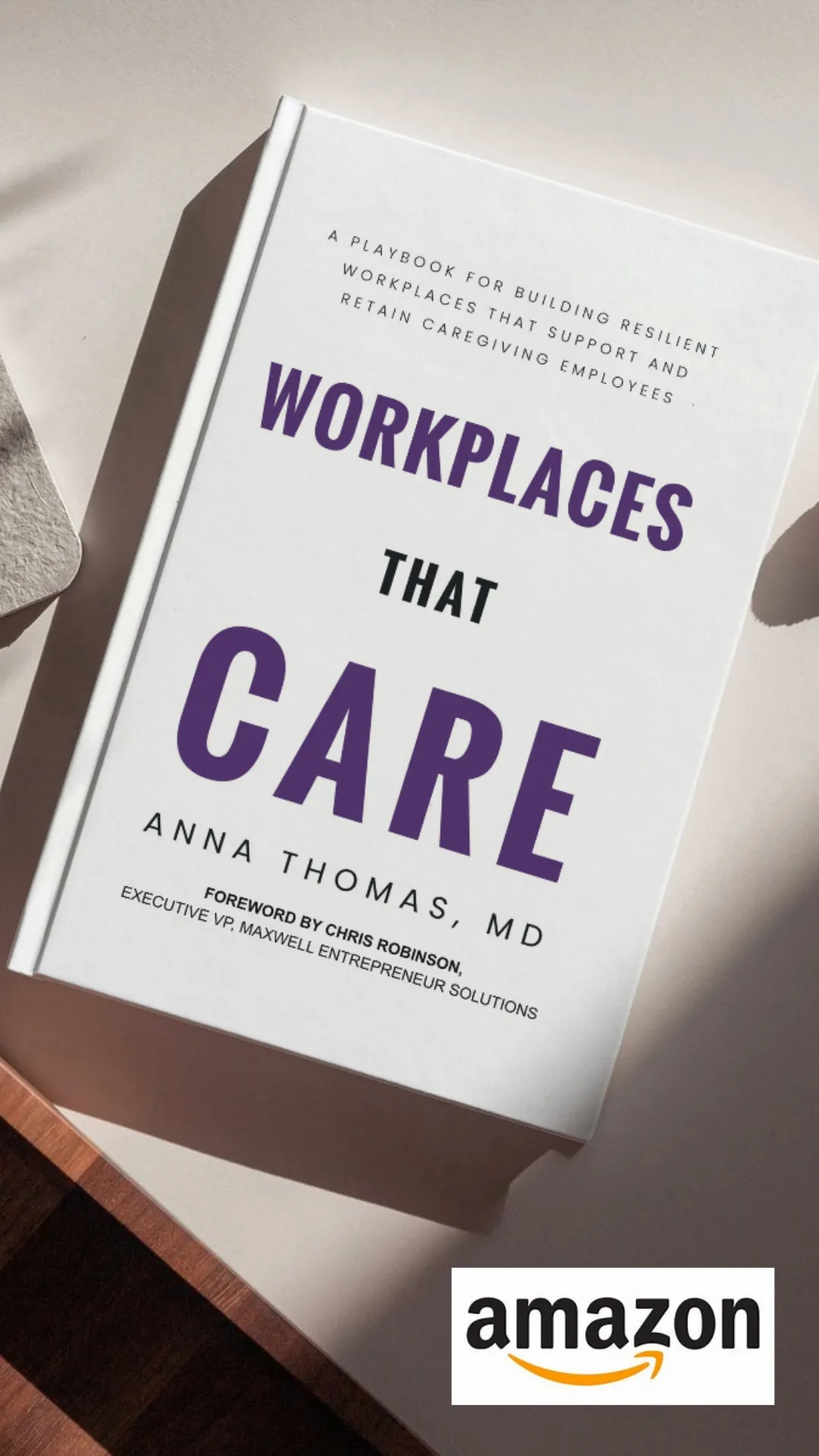
Workplaces That Care Book: https://amzn.to/49w0cl1
The Future of Work is CARE (free training): https://workplacesthatcare.com/webinar-registration
*Bio: Dr. Anna Thomas is a board-certified physician, TEDx speaker, workplace wellbeing strategist, and leadership coach who helps organizations strengthen culture, resilience, and performance in a changing world. As founder of LifeCare LeadHership and Workplaces That Care, she blends clinical insight with leadership development to teach practical tools for building supportive, care-ready workplaces. Her keynotes and trainings address workforce wellbeing, retention, burnout prevention, caregiving in the workplace, women's leadership, and navigating life and work transitions. As the creator of the CARE Framework, she equips leaders to support the whole person so teams stay engaged, healthy, and committed. Audiences appreciate her grounded delivery, relatable stories, and clear, actionable strategies. Learn more or book Dr. Thomas at www.WorkplaceWellbeingSpeaker.com
The views and opinions expressed in this post are solely those of Dr. Thomas and do not reflect the views of any past or present employer. This content is for educational and informational purposes only and is not intended as medical or legal advice.