How to Align Care Support with Talent Strategy and Succession Planning
What if your next leader does not leave your organization for a better opportunity—but instead quietly steps back because life becomes unsustainable?
This is a reality many organizations are facing, often without realizing it until it is too late.
Succession plans are built with intention. High-potential employees are identified, leadership pathways are mapped, and development opportunities are carefully designed.
But within these plans, there is often a critical gap.
Real life.
As explored in this discussion , caregiving responsibilities, health challenges, and personal demands are shaping who stays, who advances, and who steps back from leadership tracks. When these realities are not accounted for, organizations risk losing future leaders not to competitors, but to exhaustion.
Where Traditional Succession Planning Falls Short
Most talent strategies are built on a familiar set of criteria.
Performance. Potential. Visibility. Readiness.
These metrics are important, but they are incomplete.
They often assume that employees have consistent availability and the capacity to fully engage in every opportunity presented to them. They do not account for fluctuations in life circumstances that may temporarily affect how employees show up.
Caregiving and wellness support, when they exist, are often positioned separately from talent discussions. They may sit within benefits or employee assistance programs, disconnected from leadership development conversations.
This separation creates risk.
Employees with caregiving responsibilities may be perceived as less available, even when their performance remains strong. Leadership readiness becomes tied to visibility rather than capability. When someone steps back, there is often no structured plan to support continuity.
The result is a leadership pipeline that is fragile.
It works under ideal conditions, but not under real ones.
Reframing Leadership Through a Care Lens
To build more resilient succession plans, organizations must rethink how they define leadership.
Caregiving and life responsibilities should not be viewed as obstacles. They are contexts that develop important leadership skills.
Employees managing complex personal responsibilities often demonstrate adaptability, prioritization, and emotional intelligence. They navigate uncertainty and make decisions under pressure.
These are not secondary traits. They are core leadership capabilities.
Recognizing this requires a shift in mindset.
Leadership pathways do not need to be linear. They can be adaptive. Progression can occur in phases, with periods of acceleration and periods of adjustment.
When organizations embrace this flexibility, they create pathways that reflect the realities of their workforce.
Integrating Care into Talent Strategy
Aligning care support with talent strategy involves intentional design.
One of the first steps is to incorporate care into readiness criteria. Instead of focusing solely on traditional indicators, consider how employees manage complexity and respond to changing circumstances.
These qualities provide a more complete picture of leadership potential.
Flexible pathways are also essential.
This may include shared leadership roles, phased advancement, or opportunities to step into and out of roles without long-term penalties. These approaches allow employees to continue developing while managing personal responsibilities.
Planning for continuity is another critical element.
Cross-training and building redundancy into teams ensure that transitions can be managed smoothly. When employees need to step back temporarily, the organization remains stable.
Equally important is normalizing conversations about care.
During talent reviews and development discussions, leaders can create space for employees to share relevant life factors. This does not require disclosure of personal details, but it signals that these considerations are part of planning.
When employees feel safe acknowledging their realities, leaders can make more informed decisions.
Building an Adaptive Leadership Pipeline
Consider what this alignment looks like in practice.
Imagine a group of high-potential employees. Some are navigating significant caregiving responsibilities.
Instead of evaluating them solely on availability, leaders assess outcomes, adaptability, and effectiveness.
Opportunities are structured to allow flexibility. Roles may be shared or paced differently. Teams are cross-trained to ensure coverage and continuity.
Regular check-ins allow for adjustments based on changing circumstances.
In this model, employees remain connected to their development, even during challenging periods.
No one is penalized for being human.
At the same time, standards remain high.
Performance expectations are clear, but the pathways to achieving them are more flexible.
From Empathy to Strategy
When care support is integrated into talent strategy, it moves beyond being a benefit.
It becomes part of how the organization operates.
The message shifts from understanding to planning.
Leaders are not simply responding to challenges as they arise. They are designing systems that anticipate and accommodate them.
This shift has measurable outcomes.
Retention improves as employees feel supported in both their professional and personal lives. Engagement increases because employees can sustain their contributions over time. Leadership pipelines become more stable and diverse.
These outcomes are not incidental. They are the result of intentional alignment.
Why This Matters for the Future of Work
The nature of work is changing.
Employees are balancing more complex responsibilities than ever before. Caregiving is no longer limited to later stages of life. It is present across all levels of the workforce.
Organizations that fail to account for this reality risk building systems that do not reflect how people actually live and work.
Those that adapt have an opportunity to create more resilient and inclusive environments.
Succession planning is not just about identifying future leaders. It is about creating the conditions that allow them to stay and grow.
Leading Forward
Aligning care support with talent strategy is not about lowering expectations.
It is about designing systems that support sustained performance.
It requires a willingness to challenge traditional assumptions and rethink how leadership development is structured.
But the benefits are significant.
Stronger retention. Greater continuity. More adaptable leadership pipelines.
And a culture that reflects the realities of the workforce.
If you are ready to take a more intentional approach to succession planning, this is the opportunity to lead differently.
To build systems that support both people and performance.
And to ensure that your future leaders are not lost simply because their full lives were never considered.
If you would like more practical strategies and insights, I invite you to stay connected.
Subscribe to the Workplaces That Care newsletter for guidance on building workplaces where leadership and life can coexist.
Together, let's build a workplace that CARES!
Dr. Anna Thomas
Explore More from Workplaces That Care
Read More: https://workplacesthatcare.com/blog
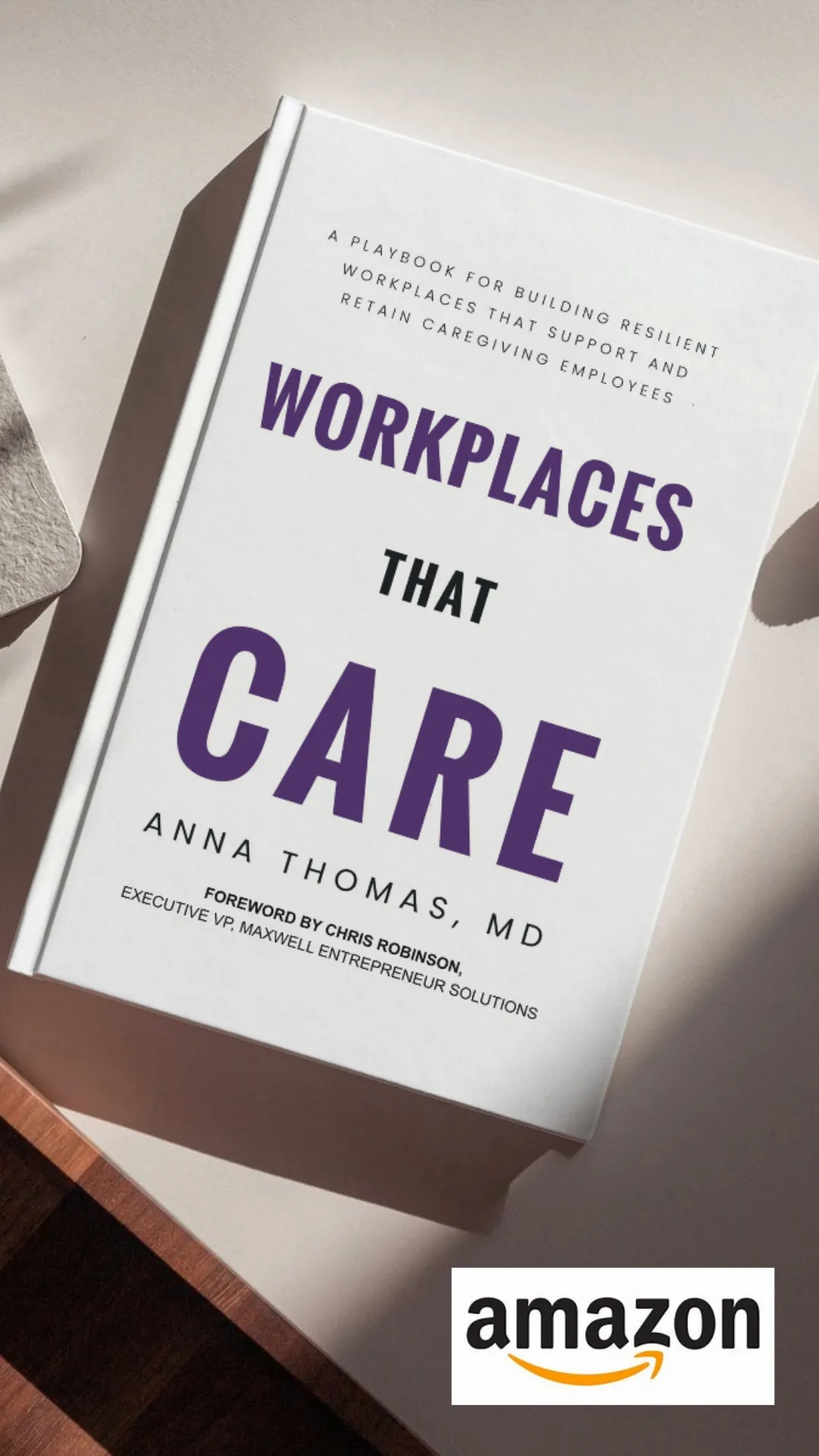
Workplaces That Care Book: https://amzn.to/49w0cl1
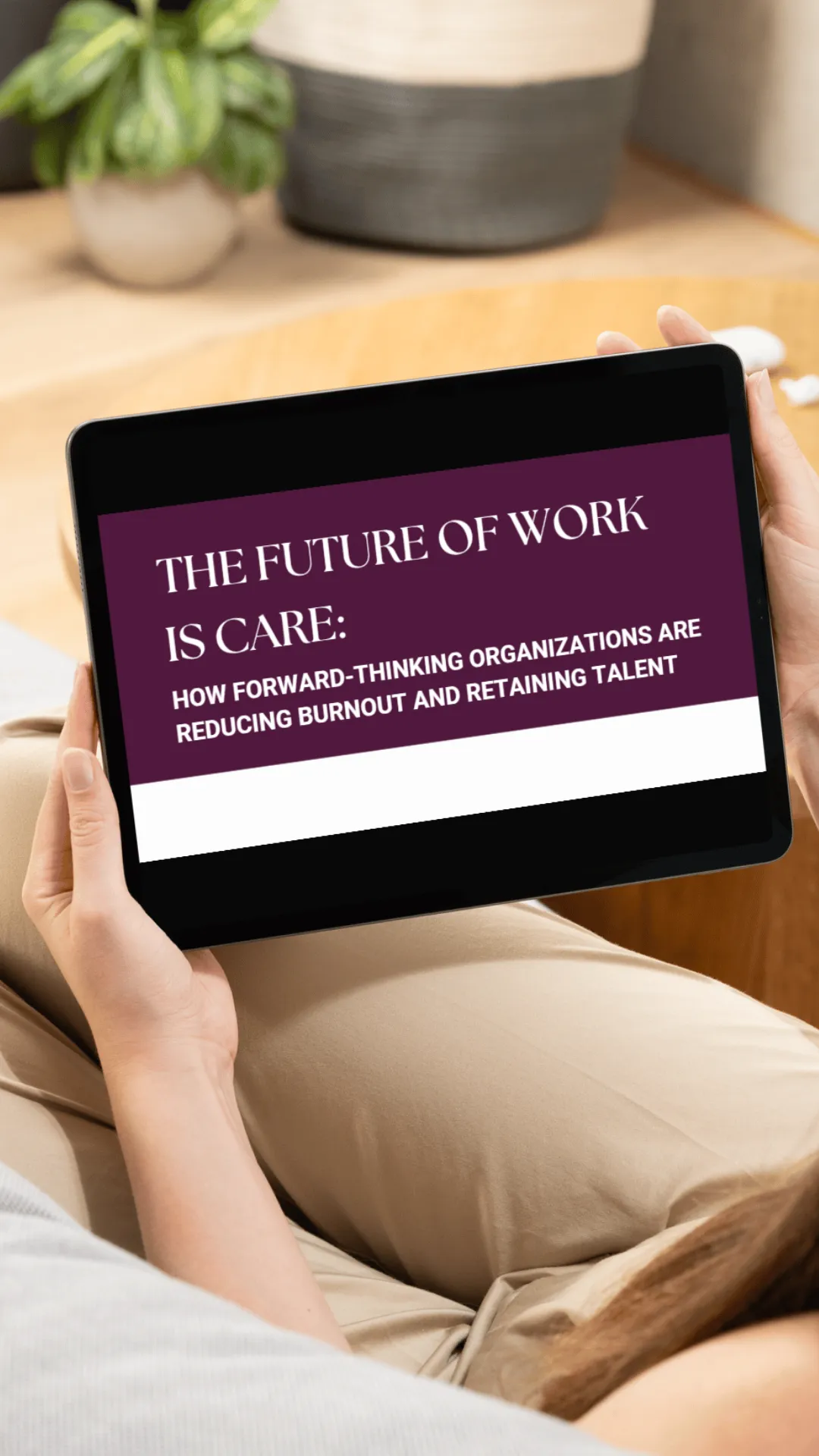
The Future of Work is CARE (free training): https://workplacesthatcare.com/webinar-registration
*Bio: Dr. Anna Thomas is a board-certified physician, TEDx speaker, workplace wellbeing strategist, and leadership coach who helps organizations strengthen culture, resilience, and performance in a changing world. As founder of LifeCare LeadHership and Workplaces That Care, she blends clinical insight with leadership development to teach practical tools for building supportive, care-ready workplaces. Her keynotes and trainings address workforce wellbeing, retention, burnout prevention, caregiving in the workplace, women’s leadership, and navigating life and work transitions. As the creator of the CARE Framework, she equips leaders to support the whole person so teams stay engaged, healthy, and committed. Audiences appreciate her grounded delivery, relatable stories, and clear, actionable strategies. Learn more or book Dr. Thomas at www.WorkplaceWellbeingSpeaker.com
The views and opinions expressed in this post are solely those of Dr. Thomas and do not reflect the views of any past or present employer. This content is for educational and informational purposes only and is not intended as medical or legal advice.