How Caregiving Is Reshaping the Experience of Millennials and Gen Z at Work
We often talk about Millennials and Gen Z in terms of flexibility, digital fluency, and evolving workplace expectations.
They are seen as ambitious, adaptable, and focused on growth.
But there is a critical part of their reality that many organizations are still missing.
They are also caregiving.
And they are doing it earlier, more quietly, and often with far fewer resources than expected. As explored in this discussion , this is not a small shift. It is a fundamental change in the workforce that leaders can no longer afford to overlook.
The Changing Face of Caregiving
For many years, caregiving was associated with later stages of life. It was something employees navigated after establishing their careers.
That assumption no longer holds.
Millennials, now in their 30s and 40s, are balancing multiple responsibilities at once. They may be raising young children while also supporting aging parents. Many are navigating dual-care roles without the stability or support systems previous generations relied on.
At the same time, Gen Z is entering the workforce already carrying caregiving responsibilities. Some are supporting siblings. Others are playing active roles in family mental health or contributing financially in ways that go beyond what we traditionally expect at that stage of life.
What makes this shift more complex is that these employees are often early in their careers. They are still building credibility, learning workplace norms, and trying to establish themselves professionally.
This creates a unique and often invisible pressure.
The Silence Around Caregiving
One of the most important dynamics to understand is that younger employees often do not speak openly about their caregiving roles.
They are not hiding because they are disengaged. They are staying silent because they are trying to succeed.
Many worry about being perceived as unreliable or less committed. They want to be seen as capable and ready for growth. Asking for flexibility can feel risky, especially when they are still proving their value.
So instead, they absorb the pressure.
They push through exhaustion. They adjust their schedules quietly. They take on emotional and logistical burdens without acknowledgment or support.
On the surface, they may appear high-performing. But beneath that performance is often a level of strain that is not sustainable.
Over time, that strain leads to difficult choices. Some step back from opportunities. Others decline advancement. And many eventually leave environments that do not recognize or support their reality.
This is not a retention issue caused by lack of motivation. It is a response to lack of support.
What This Means for Leaders
If leaders are not actively addressing caregiving, they are missing a defining factor in the experience of their workforce.
Millennials and Gen Z bring strong values into the workplace. They prioritize transparency, mental health, purpose, and flexibility. They are not looking to avoid hard work. They are looking to do meaningful work in environments that acknowledge their full lives.
When workplaces fail to create space for that reality, employees are forced to choose between personal responsibilities and professional growth.
That is not a sustainable model.
Leaders who want to retain and develop emerging talent must begin to integrate caregiving into their understanding of performance, engagement, and culture.
Building a More Supportive Workplace
Supporting younger caregivers does not require lowering expectations. It requires expanding how we define support.
It begins with normalizing the conversation.
Caregiving should not be treated as an exception or a special case. It should be recognized as a common part of life that can affect employees at any stage of their careers. Bringing this into onboarding, team discussions, and development conversations signals that it is safe to acknowledge.
Clarity is equally important. Many younger employees do not know what support looks like in practice. Vague statements about flexibility are not enough. Leaders need to provide clear examples, policies, and pathways so employees understand what is available to them.
Career development must also evolve. Temporary shifts in availability should not permanently limit growth. Organizations that create flexible pathways for advancement demonstrate that they value both performance and people.
Involving employees in shaping these systems can be especially powerful. Asking what support would make it easier to stay and grow provides insight that leaders cannot assume.
And when employees see their input reflected in real changes, it strengthens trust and engagement.
Recognizing the Leadership Potential in Caregiving
One of the most overlooked aspects of caregiving is the skill set it builds.
Caregivers develop resilience, adaptability, problem-solving, and emotional intelligence. These are not secondary qualities. They are core leadership competencies.
When organizations fail to recognize caregiving, they overlook a significant source of leadership potential.
When they acknowledge and support it, they unlock that potential in meaningful ways.
This requires a shift in perspective.
Caregiving is not a limitation. It is a form of leadership.
A Moment for Reflection
As a leader, it is worth pausing to consider what you may not be seeing.
Who on your team might be navigating responsibilities outside of work without support? Who might be carrying more than they are able to share?
Sometimes, a small change in how you ask a question or open a conversation can make a significant difference.
Creating space for honesty does not weaken performance. It strengthens it.
Moving Forward with Intention
The workforce is changing, and caregiving is a central part of that change.
Organizations that adapt will not only retain talent but also build stronger, more resilient teams. Those that do not risk losing employees who have the potential to lead, innovate, and grow within their organization.
The opportunity here is not just to respond, but to lead.
To create environments where people do not have to hide parts of their lives in order to succeed.
To build cultures that reflect the reality of today’s workforce.
And to recognize that supporting caregivers is not just an act of empathy. It is a strategic decision.
If you are ready to build a workplace that supports the next generation of leaders, I invite you to stay connected.
Subscribe to the Workplaces That Care newsletter for practical strategies, leadership insights, and tools to help you create a more supportive and sustainable workplace.
Together, let's build a workplace that CARES!
Dr. Anna Thomas
Explore More from Workplaces That Care
Read More: https://workplacesthatcare.com/blog
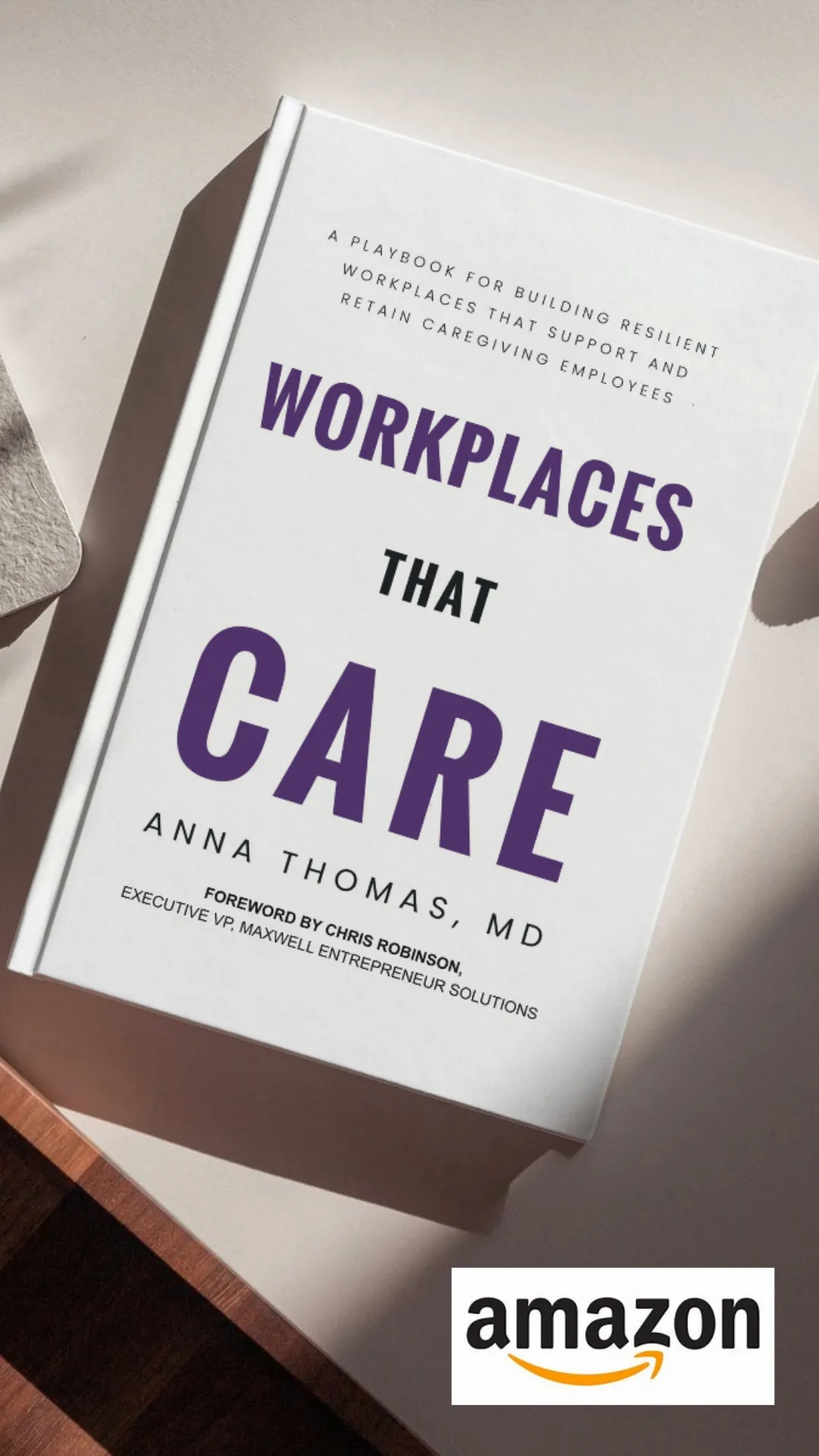
Workplaces That Care Book: https://amzn.to/49w0cl1
The Future of Work is CARE (free training): https://workplacesthatcare.com/webinar-registration
*Bio: Dr. Anna Thomas is a board-certified physician, TEDx speaker, workplace wellbeing strategist, and leadership coach who helps organizations strengthen culture, resilience, and performance in a changing world. As founder of LifeCare LeadHership and Workplaces That Care, she blends clinical insight with leadership development to teach practical tools for building supportive, care-ready workplaces. Her keynotes and trainings address workforce wellbeing, retention, burnout prevention, caregiving in the workplace, women’s leadership, and navigating life and work transitions. As the creator of the CARE Framework, she equips leaders to support the whole person so teams stay engaged, healthy, and committed. Audiences appreciate her grounded delivery, relatable stories, and clear, actionable strategies. Learn more or book Dr. Thomas at www.WorkplaceWellbeingSpeaker.com
The views and opinions expressed in this post are solely those of Dr. Thomas and do not reflect the views of any past or present employer. This content is for educational and informational purposes only and is not intended as medical or legal advice.