The ROI of Supporting Caregivers at Work: Turning Hidden Costs Into Strategic Value
Most organizations do not believe they have a caregiving budget.
But they do.
It simply does not appear as a line item. Instead, it shows up in less visible ways. Turnover. Absenteeism. Disengagement. Missed leadership opportunities.
These are not isolated issues. They are ongoing costs that organizations absorb every day. And as highlighted in this discussion , the real question is not whether you are investing in caregiving. It is whether you are seeing any return on that investment.
The Hidden Costs You Are Already Paying
When a caregiver leaves an organization, the impact goes far beyond filling a vacant role.
There is the cost of recruiting, hiring, and training a replacement. There is the loss of institutional knowledge and team continuity. There is the disruption to workflow and the time required for a new employee to reach full productivity.
These costs are significant, but they are often expected and accepted as part of doing business.
What is less visible is the cost of employees who stay but struggle.
Caregivers who feel unsupported may continue showing up to work, but their focus and energy are divided. This can lead to reduced productivity, slower decision-making, and increased errors. These shifts are subtle and rarely tracked, but they affect overall performance.
There is also a cultural cost.
When employees see colleagues struggling without support or leaving because of caregiving pressures, it shapes how they perceive the organization. Trust can erode. Engagement can decline. Teams may become less collaborative and more cautious.
All of these factors contribute to a workplace that is less stable and less effective.
Reframing Care as a Strategic Investment
Supporting caregivers is often framed as a benefit or an accommodation.
In reality, it is a strategic decision.
When organizations provide meaningful support, they create conditions where employees can perform more consistently and sustainably. This leads to stronger retention, improved engagement, and more reliable performance across teams.
Research has shown that organizations with caregiver support programs often experience lower turnover and higher levels of engagement. Even modest improvements in retention can offset the cost of implementing these programs.
But beyond external research, every organization has its own data.
The challenge is knowing where to look.
What Changes When You Support Caregivers
When caregiving is acknowledged and supported, several important shifts occur.
Employees are more likely to stay. Retention improves because individuals feel understood and valued.
Absenteeism decreases as employees are better able to manage their responsibilities without reaching a breaking point.
Performance becomes more stable. Instead of fluctuating under pressure, employees can maintain a more consistent level of contribution.
High-potential employees are more likely to remain on leadership tracks. They do not have to choose between personal responsibilities and professional growth.
Recruitment also benefits. Organizations known for supportive cultures attract candidates who are looking for environments where they can succeed without sacrificing their wellbeing.
These outcomes are not incidental. They are the result of intentional design.
How to Start Measuring ROI
One of the most common barriers to investing in caregiver support is uncertainty about how to measure its impact.
The process does not need to be complex.
It begins with asking the right questions.
What does it cost to replace a high-performing employee in your organization? This includes recruitment, onboarding, and lost productivity.
How many employees have left or reduced their engagement due to caregiving pressures? While this may not always be formally tracked, patterns often emerge through exit interviews or manager observations.
What would a small improvement in retention mean? Even a modest reduction in turnover can translate into significant cost savings.
What is the cost of implementing support initiatives? This may include flexible work policies, caregiver resources, or training for managers.
When these questions are considered together, a clearer picture begins to form.
Organizations often discover that the cost of inaction is higher than the cost of support.
Moving From Cost to Value
Shifting the perspective from cost to value is a critical step.
Caregiver support is not about reducing standards or adding unnecessary complexity. It is about aligning organizational practices with the realities of the workforce.
When employees feel safe and supported, they are more engaged. When they are trusted, they are more likely to take initiative. When they are valued, they are more committed to their work and their teams.
These factors contribute directly to performance.
They also create a workplace that is more resilient.
In times of change or uncertainty, organizations with strong cultures of support are better equipped to adapt. Employees are more willing to collaborate, communicate, and contribute to solutions.
This is where the true return on investment becomes visible.
Building a Workplace That Sustains Performance
Supporting caregivers is not a one-time initiative. It is an ongoing commitment.
It requires leadership alignment, clear policies, and consistent communication. It involves training managers to recognize and respond to caregiving challenges effectively.
It also requires a willingness to listen.
Employees often have valuable insights into what support would make the greatest difference. Creating channels for feedback can help organizations design more effective solutions.
Over time, these efforts contribute to a culture where care is integrated into how work is done.
This does not weaken performance. It strengthens it.
Why This Matters Now
The workforce is evolving, and caregiving responsibilities are becoming more common across all levels of an organization.
Ignoring this reality is no longer sustainable.
Organizations that recognize and address caregiving will be better positioned to retain talent, maintain performance, and build strong leadership pipelines.
Those that do not may continue to absorb hidden costs without realizing there is a more effective approach.
Moving Forward with Intention
Every organization is already investing in caregiving, whether intentionally or not.
The opportunity is to make that investment visible and strategic.
To shift from absorbing costs to creating value.
To design systems that support employees while strengthening performance.
And to build a workplace where people can succeed without sacrificing their responsibilities outside of work.
If you are ready to take a more intentional approach, this is the moment to begin.
Subscribe to the Workplaces That Care newsletter for practical strategies, leadership insights, and tools to help you build a workplace that supports both people and performance.
Together, let's build a workplace that CARES!
Dr. Anna Thomas
Explore More from Workplaces That Care
Read More: https://workplacesthatcare.com/blog
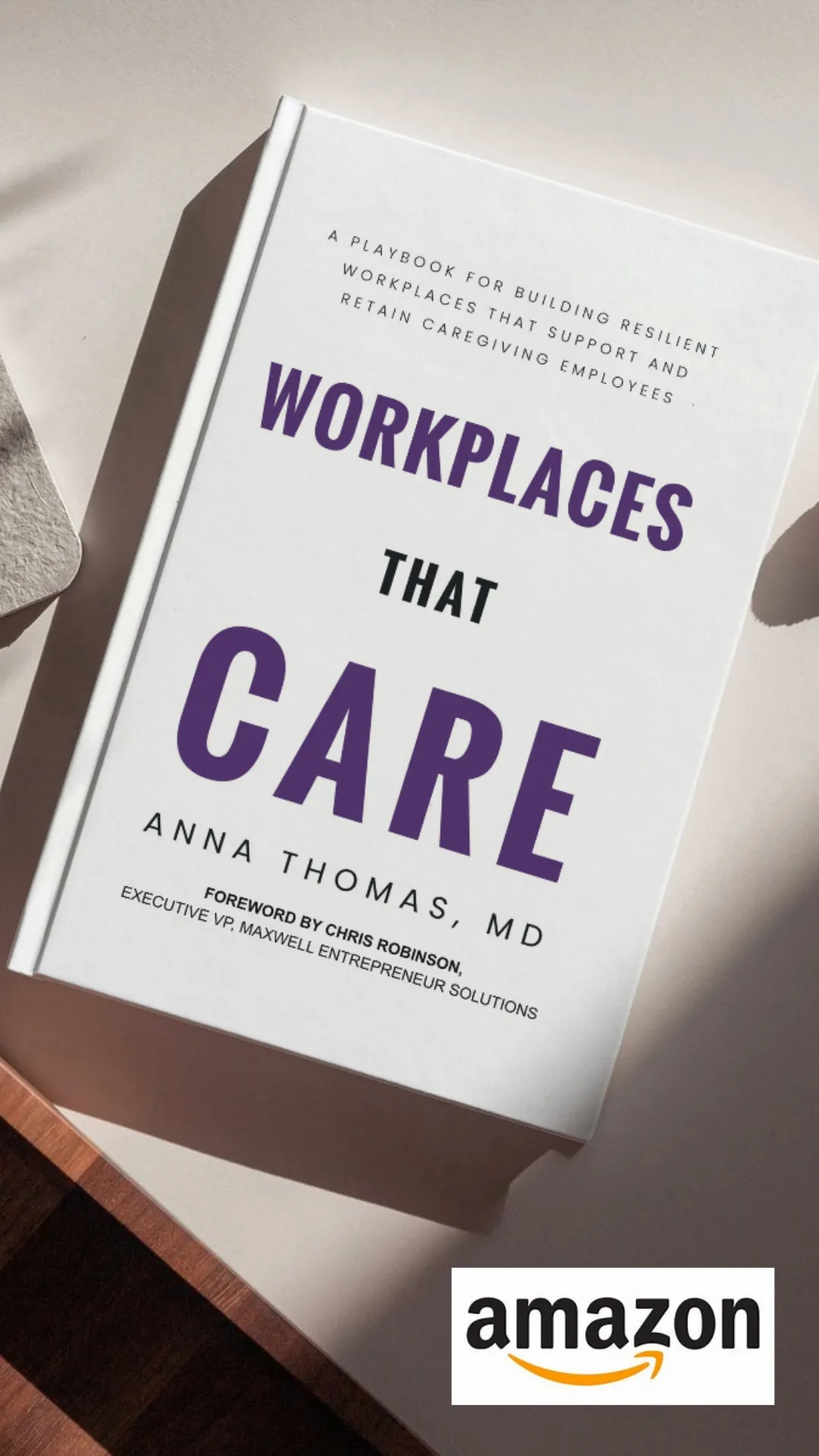
Workplaces That Care Book: https://amzn.to/49w0cl1
The Future of Work is CARE (free training): https://workplacesthatcare.com/webinar-registration
*Bio: Dr. Anna Thomas is a board-certified physician, TEDx speaker, workplace wellbeing strategist, and leadership coach who helps organizations strengthen culture, resilience, and performance in a changing world. As founder of LifeCare LeadHership and Workplaces That Care, she blends clinical insight with leadership development to teach practical tools for building supportive, care-ready workplaces. Her keynotes and trainings address workforce wellbeing, retention, burnout prevention, caregiving in the workplace, women’s leadership, and navigating life and work transitions. As the creator of the CARE Framework, she equips leaders to support the whole person so teams stay engaged, healthy, and committed. Audiences appreciate her grounded delivery, relatable stories, and clear, actionable strategies. Learn more or book Dr. Thomas at www.WorkplaceWellbeingSpeaker.com
The views and opinions expressed in this post are solely those of Dr. Thomas and do not reflect the views of any past or present employer. This content is for educational and informational purposes only and is not intended as medical or legal advice.