Why Employees Hide Caregiving Responsibilities at Work
Why Employees Hide Caregiving Responsibilities at Work
Why caregiver benefits alone aren't enough—and how leaders can build a workplace culture where employees feel safe seeking support.
Your organization offers flexible work arrangements.
Perhaps you provide paid family leave, backup care, employee resource groups, or other caregiver benefits.
You've invested in supporting employees.
But here's an important question:
Why might employees still hesitate to tell their managers they're caregivers?
Some employees may avoid discussing their responsibilities. Others may use vacation time instead of available caregiver leave. Some may wait until their circumstances become overwhelming before asking for support.
It can be frustrating for HR leaders and managers who have worked hard to create supportive policies.
But there's an important distinction we need to understand.
Access to benefits doesn't automatically mean employees believe it's safe to use them.
Employees make decisions about disclosure based on more than what's written in a handbook. They also consider workplace expectations, previous experiences, leadership behavior, and how their colleagues are treated.
If we want to create truly caregiver-inclusive workplaces, we need to understand why employees may remain silent—and what organizations can do to build trust.
Why Employees Don't Disclose Caregiving Responsibilities
Caregiving is a normal part of life, yet discussing it at work can feel complicated.
An employee might be supporting an aging parent, raising a child with additional care needs, coordinating medical appointments for a loved one, or helping a family member navigate a difficult transition.
These responsibilities can require time, attention, and flexibility.
But employees may hesitate to talk about them for several reasons.
1. Fear of Being Seen as Less Committed
Many workplaces still associate professional dedication with constant availability.
Employees may worry that discussing caregiving responsibilities will cause others to question their reliability or commitment.
They may fear being passed over for important assignments, leadership opportunities, or promotions.
Even when these concerns haven't been confirmed, they can influence whether someone feels comfortable asking for support.
2. Previous Negative Experiences
An employee who has experienced judgment, dismissive comments, or an unsupportive response may be reluctant to discuss caregiving again.
A single difficult experience can influence how someone approaches future conversations.
This is why consistency matters.
Employees need to see that workplace support is reflected in everyday behavior—not just policy statements.
3. Not Wanting to Be Treated Differently
Some employees prefer not to disclose because they don't want to feel like an exception.
They may worry that colleagues will resent their flexibility or assume they are receiving special treatment.
Others may simply prefer to keep their family responsibilities private.
An inclusive workplace must respect both the need for support and an employee's choice about personal disclosure.
4. Not Recognizing Themselves as Caregivers
Not everyone who provides care identifies as a caregiver.
Consider an employee who:
Checks in daily on an aging parent.
Helps a family member manage medical appointments.
Supports a sibling during a mental health challenge.
Coordinates care for a loved one recovering from surgery.
Balances parenting responsibilities while supporting another family member.
They may see these activities simply as family responsibilities.
As a result, they may not recognize that workplace caregiver resources could be relevant to them.
Organizations need to describe available support in language that reflects the different ways people provide care.
When Workplace Culture Contradicts Caregiver Benefits
An organization may offer generous benefits while unintentionally communicating that using them could affect how employees are perceived.
Consider the messages employees might receive when:
Leaders routinely celebrate working late or being constantly available.
Colleagues make jokes about employees who need scheduling flexibility.
Caregiving responsibilities are discussed as distractions.
Employees worry that requesting support could limit advancement.
Managers respond inconsistently to similar requests.
Senior leaders rarely acknowledge caregiving as part of working life.
These signals may create uncertainty about whether caregiver support is genuinely encouraged.
A benefit can be available on paper while still feeling difficult to access in practice.
This is why workplace culture and benefit design must work together.
Policies explain what is available.
Leadership behavior influences whether employees trust the process.
Why Low Benefits Usage Doesn't Always Mean Low Need
When organizations evaluate caregiver programs, they often look at participation and utilization.
These measures can provide useful information.
But low utilization doesn't necessarily mean employees have no caregiving needs.
Other possibilities include limited awareness, confusing eligibility requirements, privacy concerns, or uncertainty about how requests will be received.
HR leaders should therefore examine more than participation rates.
Useful questions include:
Do employees know which caregiver benefits are available?
Do they understand the eligibility requirements?
Is the process for accessing support straightforward?
Can employees ask questions without disclosing unnecessary personal information?
Do managers know how to discuss available resources?
Are employees confident that flexibility requests will be evaluated fairly?
Anonymous feedback and appropriate employee listening methods can help organizations identify potential gaps without pressuring individuals to share private caregiving information.
The goal is not to increase disclosure for its own sake.
It's to make support accessible to the people who need it.
Five Ways Leaders Can Build a Culture of Caregiver Trust
Creating a supportive workplace requires more than encouraging employees to speak up.
Organizations must also demonstrate that requests for support will be handled respectfully, consistently, and without unnecessary judgment.
Here are five practical places to start.
1. Model Caregiver Inclusion From the Top
Senior leaders influence what employees perceive as acceptable workplace behavior.
When leaders communicate openly about the importance of caregiving and work-life responsibilities, they help normalize the conversation.
This doesn't mean executives must share personal family details.
Instead, they can acknowledge that employees have responsibilities beyond work and reinforce that available support is intended to be used.
For example:
"We recognize that employees may have caregiving responsibilities at different stages of life. We want everyone to understand the support options available."
Visible leadership support helps reinforce the organization's commitment.
2. Separate Flexibility From Assumptions About Career Commitment
Employees should not automatically be viewed as less capable or committed because they use available flexibility or caregiver benefits.
Managers should evaluate performance based on relevant expectations, actual work outcomes, and demonstrated contributions.
Organizations can support this approach by reviewing how performance, promotion, and development decisions are made.
Clear evaluation criteria help reduce unnecessary assumptions about employees' personal responsibilities.
Caregiving responsibilities and professional ambition are not mutually exclusive.
3. Use Inclusive Language That Normalizes Caregiving
The words leaders use can influence whether employees feel comfortable discussing their needs.
Consider the difference between:
"We can make an exception because of your family situation."
And:
"Let's review the flexibility options available and discuss what could work."
The first frames caregiving as unusual.
The second focuses on established support and practical solutions.
Managers can also use respectful, open-ended questions such as:
"Are there any scheduling needs we should consider?"
"What support would help you manage your current responsibilities?"
"Would information about our available resources be helpful?"
These approaches allow employees to discuss work-related needs without being required to reveal private details.
4. Make Caregiver Support Visible
Employees may benefit from hearing how workplace resources are used in practice.
Organizations can increase awareness through internal communications, employee resource groups, manager conversations, and examples of available support.
When employees voluntarily share caregiving experiences, their stories can help others understand that caregiving and career development can coexist.
However, participation should always be optional.
No employee should feel pressured to publicly discuss personal responsibilities in order to demonstrate that a workplace is supportive.
Stories should be shared only with appropriate permission and respect for privacy.
5. Normalize Support Before a Crisis
Caregiver conversations shouldn't begin only when an employee reaches a breaking point.
Organizations can make support information part of routine workplace communication.
For example:
During onboarding: Explain available caregiver resources and how to access them.
During employee check-ins: Invite conversations about workload and scheduling without requiring personal disclosure.
During benefits communications: Use clear examples that help employees identify relevant support.
During manager training: Practice responding to caregiving requests with empathy, clarity, and appropriate boundaries.
This approach makes caregiving support part of normal workplace operations rather than an emergency intervention.
The Important Difference Between Privacy and Silence
There is another distinction leaders need to recognize.
Employees should never feel obligated to reveal personal caregiving responsibilities simply to demonstrate trust in their organization.
Some people will prefer to keep their circumstances private, even in a supportive workplace.
That choice deserves respect.
The goal of caregiver inclusion is not to make every employee disclose.
The goal is to ensure that employees who need support can access it without unnecessary barriers, stigma, or fear.
Organizations can create clear, confidential processes and communicate support options broadly so employees don't have to share more information than necessary.
A culture of care respects privacy while making help available.
How the CARE™ Framework Supports Caregiver Inclusion
The CARE™ Framework—Culture, Awareness, Resources, and Empowerment—provides a practical way to examine why caregiver benefits may not translate into employee support.
Culture: Create an environment where caregiving responsibilities are acknowledged and employees are treated with dignity and fairness.
Awareness: Help employees recognize available resources and understand the different circumstances in which caregiver support may apply.
Resources: Provide accessible benefits information, clear policies, manager guidance, and appropriate support services.
Empowerment: Equip managers to respond consistently while giving employees understandable ways to request available support.
Together, these dimensions encourage organizations to move beyond simply offering benefits toward building the conditions that make those benefits usable.
Why This Matters for Employee Retention and Engagement
When employees are managing demanding caregiving responsibilities, workplace support can become an important consideration in how they experience their jobs.
If available resources feel inaccessible or requesting flexibility seems risky, employees may struggle to find sustainable ways to balance work and care.
That can become a concern for employee wellbeing, engagement, and retention.
Organizations should not assume that caregiver benefits alone will prevent turnover.
Instead, they should evaluate how benefits, leadership behavior, workload expectations, and organizational culture work together.
Employees need more than a list of available programs.
They need to understand how those programs fit into their work lives and whether they can access them with dignity.
Your caregivers don't want pity. They want partnership.
They want to contribute, develop their careers, and manage their personal responsibilities without feeling that one must come at the expense of the other.
The Bottom Line: Benefits Create Access. Culture Builds Trust.
Offering caregiver benefits is an important step.
But support isn't complete simply because a policy exists.
Employees must understand what resources are available, how to access them, and what they can expect when they ask for help.
Managers need training and guidance.
Senior leaders need to communicate consistent expectations.
And organizations need to examine whether everyday practices reflect their commitment to care.
The real question isn't only, "Do we offer caregiver support?"
It's, "Do our employees feel comfortable accessing it?"
As AI, automation, and new technologies continue to reshape work, the human realities of caregiving remain.
The future of work is still human.
Let's create workplaces that care.
Take the Next Step
I'm Dr. Anna Thomas, physician, leadership speaker, two-time TEDx presenter, caregiver advocate, and corporate wellness specialist.
I help organizations strengthen workforce wellbeing and create workplaces where people and performance thrive together.
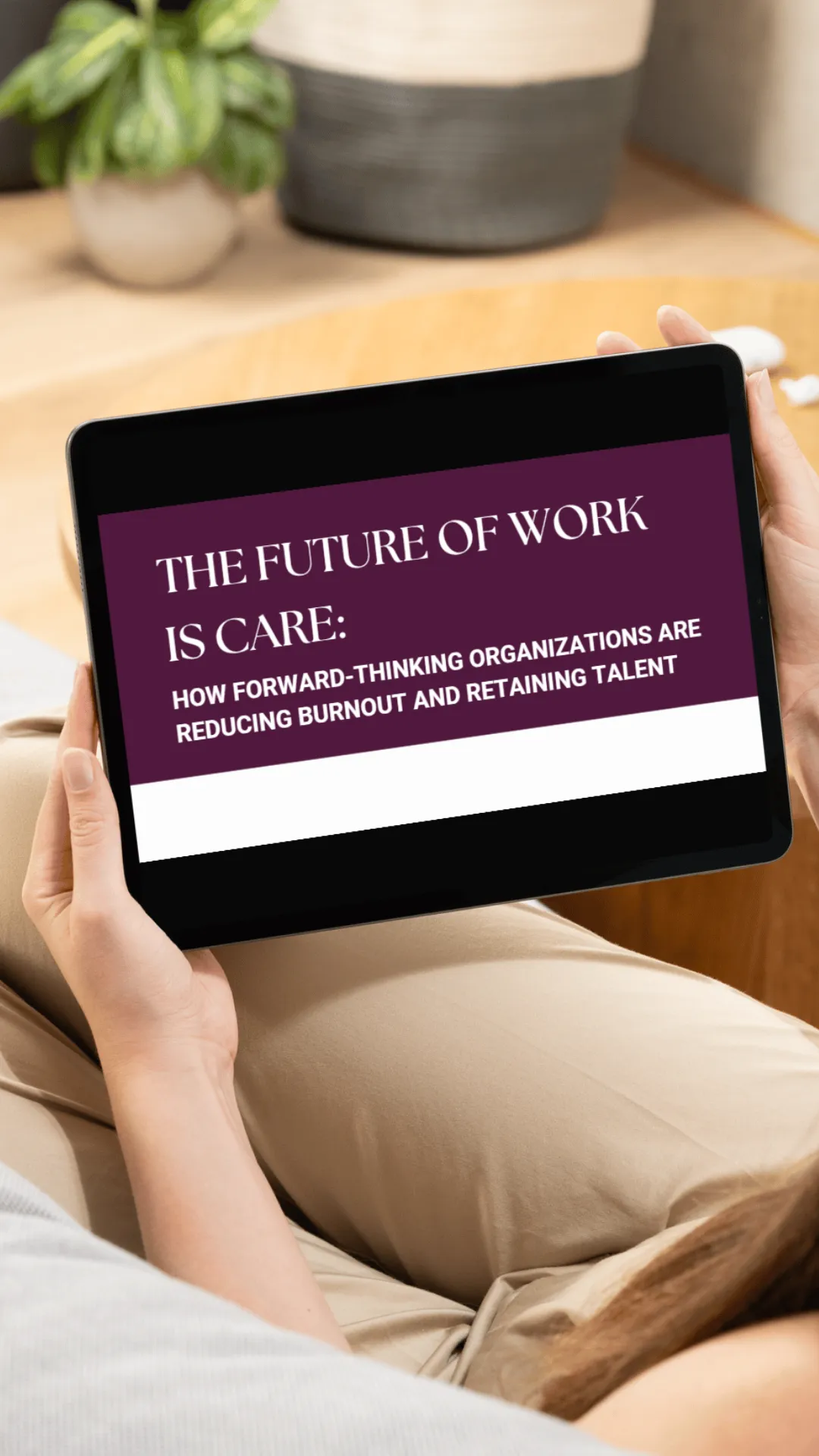
Watch my free training, The Future of Work Is Care:
https://www.workplacesthatcare.com/home
Explore practical ways to strengthen workplace culture and caregiver support through the CARE™ Framework.
Get my book, Workplaces That Care:
Discover strategies for building human-centered workplaces where employee wellbeing and organizational performance can thrive together.