How to Turn Workplace Support Policies Into Practice
How to Turn Workplace Support Policies Into Practice
Why effective workplace wellbeing policies depend on what happens at the team level.
Your organization has the policies.
Flexible work arrangements. Caregiver leave. Employee wellbeing resources. Manager guidelines.
But here's the question:
Are employees experiencing the support those policies promise?
A workplace may have carefully designed policies that look supportive on paper. Yet employees can still encounter confusion, inconsistent implementation, or uncertainty about how to request help.
That's because workplace culture isn't defined only by what appears in an employee handbook.
It's shaped by how policies are communicated, interpreted, and applied every day.
For HR professionals and organizational leaders, closing the gap between workplace policy and practice is essential to creating a culture where employees feel respected, supported, and empowered.
Policy establishes expectations. Leadership turns those expectations into everyday experience.
Why Workplace Support Policies Break Down at the Team Level
Even well-intentioned workplace policies can become difficult to implement when managers and employees don't understand how they apply in real situations.
A policy might promise reasonable flexibility, for example, without clearly explaining what arrangements are available or who can approve them.
Different managers may interpret the same guidance differently.
Employees may hesitate to ask questions because they don't know how their requests will be received.
These situations can create uncertainty and inconsistent workplace experiences.
Common implementation challenges include:
Managers lacking clear authority to make decisions.
Employees being unaware of available resources.
Different interpretations of flexibility across teams.
Inadequate training for challenging employee situations.
Unclear processes for requesting support.
Insufficient coordination between HR and team leaders.
When these gaps exist, the quality of employee support can depend too heavily on an individual manager's approach.
Supportive policies need consistent systems—not just good intentions.
1. Translate Workplace Policies Into Plain-Language Guidance
One of the simplest ways to improve policy implementation is to make guidance practical and easy to understand.
Employees shouldn't have to interpret complicated HR language to determine whether support is available.
Similarly, managers need more than broad policy statements. They need clear examples of what implementation looks like.
For instance, instead of simply stating that flexible scheduling is available, explain the process.
Scenario: A parent needs to adjust their start time.
A team member needs to begin work later to manage school drop-off.
Clear guidance should explain how to request the adjustment, who reviews it, and how team responsibilities will be covered.
Scenario: An employee needs time for a family medical appointment.
The policy should clarify available options, communication expectations, and the steps needed to maintain workflow.
These practical examples reduce uncertainty and help employees understand how support works before an urgent situation arises.
2. Give Managers Clear Decision-Making Guidance
Managers are often responsible for translating organizational policies into everyday practices.
But they may not always know where they have discretion and when they need HR approval.
This uncertainty can lead to delays, inconsistent decisions, or unnecessary escalation.
Organizations can address this by clearly identifying:
What managers can approve independently.
Which decisions require additional review.
How employee requests should be documented.
What expectations must remain consistent.
Where managers can seek guidance.
How complex situations should be escalated.
Clear decision-making frameworks help managers respond with both compassion and consistency.
They also reduce the pressure to develop individual solutions without adequate organizational support.
Managers should be empowered to implement policies—not left to interpret them alone.
3. Use Scenario-Based Training to Build Manager Confidence
Knowing that a policy exists isn't the same as knowing how to apply it.
Managers benefit from opportunities to practice responding to real workplace situations.
Scenario-based training can help leaders navigate challenging conversations while maintaining fairness and performance expectations.
Consider three examples.
An employee requests last-minute flexibility.
How should the manager respond? What alternatives are available? How will the team manage urgent responsibilities?
A team member discloses unexpected caregiving responsibilities.
How can the manager acknowledge the situation respectfully while discussing workable adjustments and available resources?
Team members raise concerns about unequal workloads.
How can the manager address fairness, communicate expectations, and maintain appropriate confidentiality?
These discussions help managers develop consistent responses rather than relying entirely on personal judgment.
Training should also clarify when managers need additional HR support.
The goal is to strengthen leadership confidence while reducing uncertainty.
4. Make Workplace Support Part of Everyday Team Operations
Caregiver support and workplace wellbeing shouldn't become relevant only when someone reaches a crisis.
Organizations can integrate supportive practices into existing team processes.
During onboarding
Explain how flexibility works, what support is available, and whom employees can contact.
Make these conversations a normal part of joining the organization.
During team check-ins
Create opportunities to discuss workload capacity, scheduling needs, and competing priorities without requiring employees to disclose private personal information.
During performance conversations
Review expectations, available resources, and potential barriers to effective performance.
During workforce planning
Consider team coverage, workload distribution, and predictable scheduling needs.
When these practices become routine, support is less likely to depend on whether an employee feels comfortable making a special request.
The goal is to make support accessible, understandable, and consistently implemented.
5. Measure Whether Employees Can Actually Use Workplace Policies
A policy may exist without employees feeling confident about accessing it.
This is why organizations should assess more than policy availability.
They should also examine employee awareness, manager readiness, and implementation consistency.
Useful questions include:
Do employees know what support options are available?
Do managers understand how to implement existing policies?
Are requests handled consistently across teams?
Do employees feel comfortable asking for support?
Are managers receiving sufficient guidance and resources?
Are employees encountering barriers when accessing benefits or flexibility?
Employee feedback, manager discussions, and appropriate policy utilization reviews can help identify areas needing attention.
This information can guide improvements without assuming that a policy is effective simply because it exists.
6. Support the Managers Responsible for Implementation
Even clear workplace policies can become difficult to implement when managers face excessive workloads or competing expectations.
Managers may be coordinating flexible schedules, addressing employee concerns, managing staffing needs, and maintaining business performance.
These responsibilities require time, resources, and organizational support.
HR and executive leaders should ensure that managers have access to practical training, clear escalation channels, and appropriate workload support.
Managers should not be expected to carry every employee wellbeing challenge alone.
This is particularly important because managers may also have caregiving responsibilities.
A sustainable culture of care must support both employees and the leaders responsible for implementing workplace policies.
Bringing Workplace Policies to Life Through the CARE™ Framework
The CARE™ Framework—Culture, Awareness, Resources, and Empowerment—offers a practical way to examine how workplace support is implemented.
Culture: Create consistent expectations that reinforce respect, fairness, and employee wellbeing.
Awareness: Ensure employees and managers understand available policies, resources, and support processes.
Resources: Provide practical guidance, training, tools, and organizational support.
Empowerment: Equip managers and employees with the knowledge and authority needed to use available support appropriately.
Together, these four dimensions encourage organizations to examine how workplace policies function in everyday situations.
Because meaningful support requires more than written commitments.
It requires practical implementation.
The Real Test of Workplace Culture
Imagine an employee approaching their manager late in the afternoon.
A family member has experienced an emergency, and the employee needs to leave.
What happens next?
Does the manager understand the available options?
Does the employee know what steps to take?
Is there a clear approach for coordinating urgent work?
Can the situation be handled respectfully and efficiently?
These everyday moments reveal whether workplace support policies are functioning as intended.
They also demonstrate why manager preparation, organizational clarity, and consistent processes matter.
Employees should not have to navigate unnecessary uncertainty when managing significant life responsibilities.
The Bottom Line: Workplace Policy Is Culture in Action
Workplace policies are important foundations for employee support.
But their effectiveness depends on how they are understood, communicated, and implemented.
For HR professionals and organizational leaders, the challenge is not simply to create supportive policies.
It's to ensure those policies become reliable workplace practices.
That requires plain-language guidance, clear manager authority, practical training, proactive communication, and ongoing assessment.
The question isn't only, "What's in our handbook?"
It's, "What happens when life happens?"
As organizations navigate AI, automation, and evolving workforce expectations, creating supportive workplaces remains a fundamentally human responsibility.
The future of work is still human. Let's create workplaces that care.
Take the Next Step
I'm Dr. Anna Thomas, physician, leadership speaker, two-time TEDx presenter, caregiver advocate, and corporate wellness specialist.
I help organizations strengthen their workforce and create workplaces where people and performance thrive together.
Watch my free training, The Future of Work Is Care:
https://www.workplacesthatcare.com/home
Discover practical strategies for bridging workplace policy and practice through the CARE™ Framework.
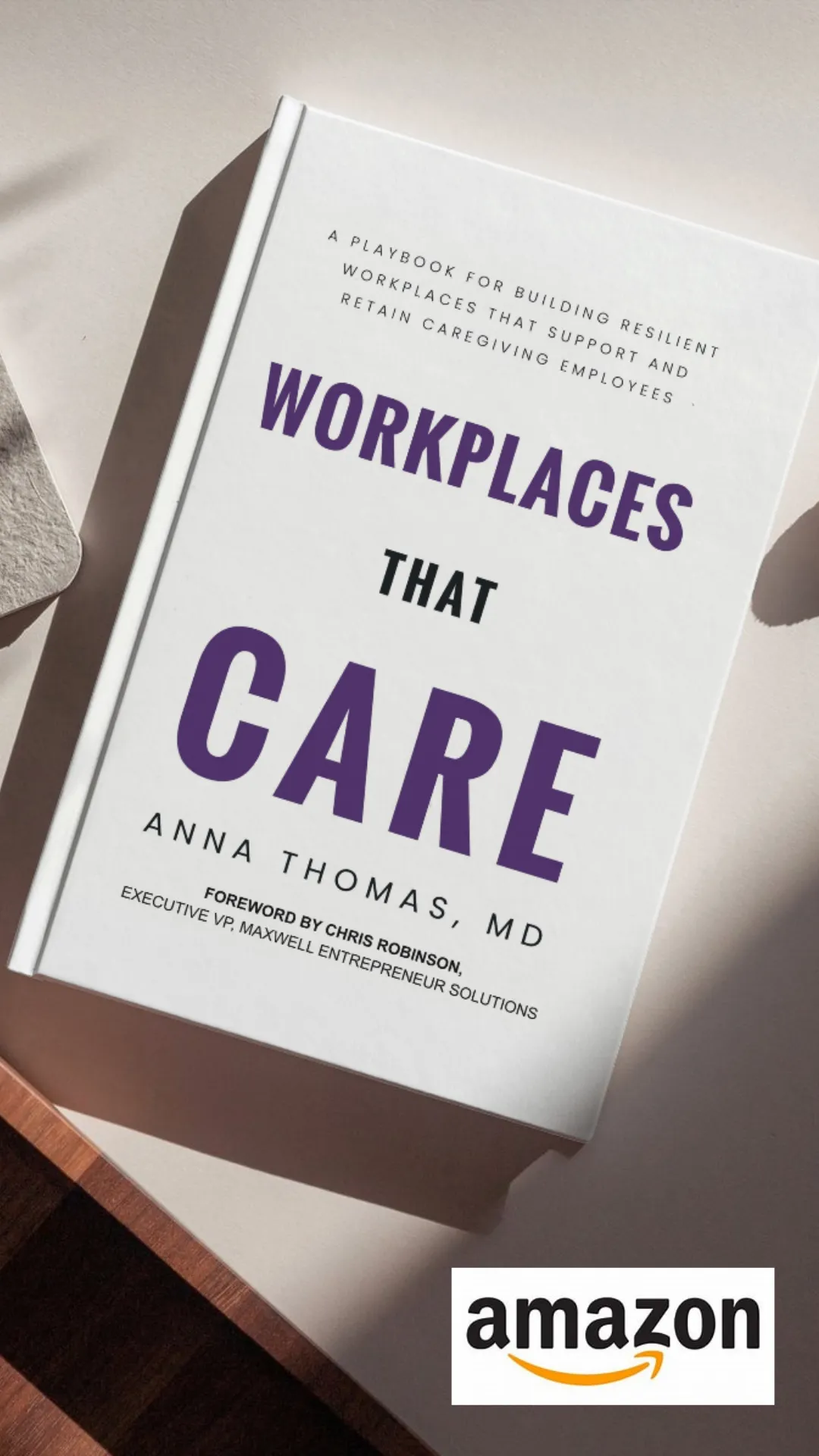
Get my book, Workplaces That Care:
Explore a deeper approach to building supportive, resilient, human-centered workplaces where care and performance reinforce one another.